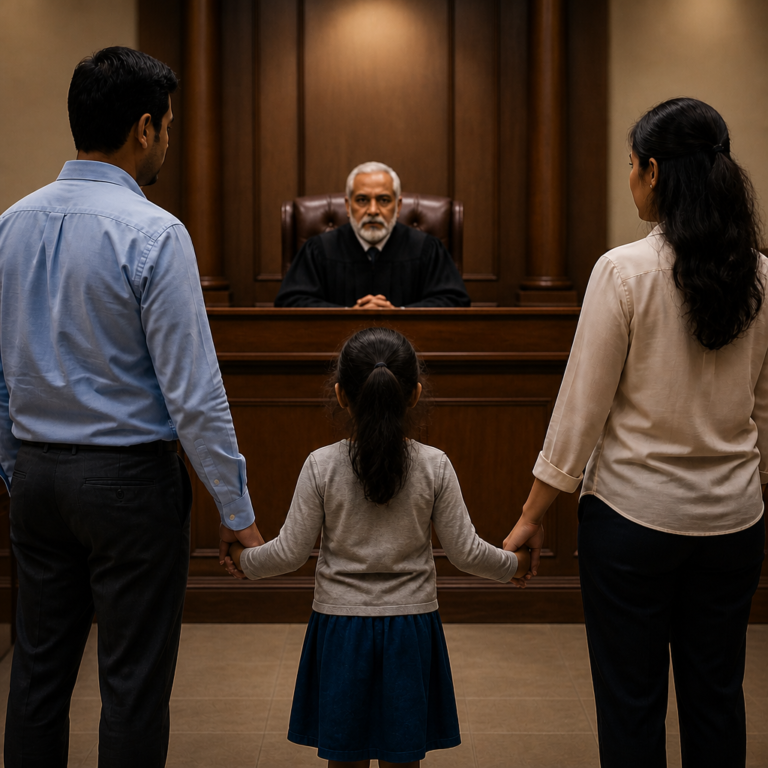

Most couples in Chandigarh imagine that out-of-court divorce will be quick, private, and less painful than fighting things out in court. But when emotions are boiling, property and custody are in question, and trust has gone, things rarely go as planned. If you’re stuck in a high-conflict divorce, the promise of an easy out-of-court settlement can feel like a cruel joke. The reality is, for many families here, trying to settle outside the courtroom just drags out the misery, wastes money, and leaves both sides frustrated.
When you’re searching for an out-of-court divorce in Chandigarh, it’s tempting to believe it can save you from courtroom stress and drama. But high-conflict divorces often get messier outside the courtroom, not easier. Knowing why these settlements fail can help you decide if it’s worth trying or if you’re better off with a clear legal process from the start.
For most high-conflict divorces in Chandigarh, out-of-court settlements rarely work because deep disagreements over property, custody, and trust usually require court intervention for a fair, enforceable solution.
Why Out-of-Court Divorce Struggles in High-Conflict Cases
What Out-of-Court Divorce Really Means in Chandigarh
Out-of-court divorce in Chandigarh sounds simple but covers several different approaches. The idea is to resolve disputes over property, money, and child custody without a judge making the final call. This usually happens through negotiation, mediation, or a formal settlement agreement signed by both sides.
The main types of out-of-court divorce processes here include:
- Mutual consent divorce: Both spouses agree on all terms, including property division and custody. A mutual consent divorce lawyer will draft a joint petition.
- Mediation: A neutral third party (mediator) tries to help couples find common ground. Mediation is sometimes court-referred, sometimes voluntary.
- Negotiated settlement: Each side, often through their family lawyer or divorce advocate, negotiates directly or through letters and calls.
On paper, these methods promise privacy, speed, and less cost than a contested court battle. In reality, they only work if both sides are willing to compromise and communicate honestly. If your spouse is hiding assets, refuses to budge on custody, or simply wants revenge, out-of-court settlement rarely delivers.
Chandigarh’s Legal Landscape
The Chandigarh legal process for divorce is based on Indian statutes like the Hindu Marriage Act, Special Marriage Act, and others. Local courts expect a good-faith attempt at settlement, but judges know when talks are pointless. Most family lawyers in Chandigarh will encourage at least one round of negotiation or mediation, but they’ll also warn when it’s a waste of time.
Why High-Conflict Divorces Overwhelm Settlement Attempts
When anger, betrayal, or fear are running the show, out-of-court divorce hits a wall. High-conflict divorces usually involve:
- Strong mistrust between spouses
- Disputes over child custody and visitation
- Fights about property, business, or inheritance
- Allegations of abuse, addiction, or infidelity
- Power imbalances (financial or emotional)
In these cases, every small issue can become a battle. Even deciding who keeps the microwave can turn into a shouting match. Honest truth? Out-of-court settlement only works when both sides feel safe, heard, and fairly treated. High-conflict divorces in Chandigarh almost never fit that picture.
Trust Deficit and Communication Breakdown
If you can’t trust your spouse to stick to their word, signing a private agreement is risky. Many people fear their partner will break promises about child support or property. Without the weight of a court order, there’s little to stop this from happening. In Chandigarh, enforcement of private settlements is weak unless the terms are made part of a court decree.
Property and Custody Complications
Property disputes in Chandigarh often involve family homes, ancestral property, or businesses. Valuing and dividing these assets is hard even with full honesty. Add in emotion, and it gets nearly impossible. Custody battles are even worse. Parents may use children as bargaining chips, and any agreement reached without legal backing can fall apart overnight.
Mediation: A Good Idea That Often Fails in High-Conflict Cases
Mediation is supposed to help couples talk things out with a neutral guide. In low-conflict cases, it can save time and money. But when both sides are angry, mediation sessions end up as shouting matches or silent standoffs. Mediators can’t force anyone to be reasonable. In Chandigarh, most high-conflict couples walk out of mediation with nothing settled except their frustration.
The Role of Divorce Lawyers and Family Advocates in Chandigarh
Your choice of divorce lawyer in Chandigarh shapes your experience more than any other factor. In high-conflict divorces, experienced family lawyers know when to push for settlement and when to prepare for court.
How Divorce Lawyers Approach High-Conflict Cases
A seasoned divorce advocate will:
- Assess the level of conflict and history of negotiation attempts
- Advise if mediation or settlement is even worth attempting
- Gather documents and evidence early, expecting a contested trial
- Set realistic expectations about time, cost, and likely outcomes
Some lawyers still push for out-of-court settlement to save face or please clients. But the best ones are honest about the odds. If your spouse has a pattern of lying, hiding assets, or using children as leverage, most lawyers in Chandigarh will say, ‘Let’s not waste time. File in court.’
Mutual Consent Divorce: Why It’s Rare in High-Conflict Situations
Mutual consent divorce is the easiest way out, but only if both sides agree on every detail. In high-conflict cases, even the wording of the petition can cause fights. If one spouse feels pressured or tricked, they can withdraw consent at any time before the final hearing. This leaves the other party back at square one, with wasted time and money.
The Trap of Informal Agreements
People sometimes sign handwritten agreements about property or custody, hoping to avoid lawyers. These informal deals rarely hold up. Unless the settlement is drafted by a proper divorce advocate and made part of the Chandigarh legal process, you risk losing everything if your spouse changes their mind.
Property, Custody, and Enforcement: The Big Sticking Points
Property and custody are the main reasons out-of-court divorce collapses in high-conflict cases. Let’s look at why these issues are so stubborn in Chandigarh.
Property Division: More Than Just Numbers
Property disputes in Chandigarh often involve:
- Family homes with sentimental value
- Jointly owned business or professional practices
- Inherited or ancestral property
- Loans, debts, or assets held in relatives’ names
Unlike cash or bank accounts, dividing property means dealing with paperwork, valuation, and sometimes family elders. Hiding or undervaluing assets is common. Even if a settlement is reached, enforcing it without a court order is tricky. Registration of property transfers can be blocked or delayed, leaving one side vulnerable.
Child Custody and Visitation: Emotional and Legal Minefields
Custody battles are the ugliest part of most high-conflict divorces. Chandigarh courts favour the child’s welfare, but parents often accuse each other of bad parenting, abuse, or neglect. Out-of-court deals on custody break down when:
- One parent refuses to honour visitation
- Relatives interfere or pressure the children
- There’s fear of abduction or relocation
Without a court’s stamp, police and schools may refuse to enforce private custody arrangements. This leaves the more vulnerable parent (usually the mother) at a disadvantage.
Enforceability: Why Court Orders Matter
Even the best private settlement is just a piece of paper unless it’s made part of a court decree. Only a judge can turn an agreement into an enforceable order. This is especially important for:
- Transfer of property titles
- Ongoing child support and alimony payments
- Custody and visitation schedules
Trying to enforce a private agreement in Chandigarh’s legal system is slow and uncertain. If your spouse refuses to comply, you’ll end up in court anyway – often with fewer rights than if you’d started there.
The Chandigarh Legal Process: How Courts Handle High-Conflict Divorce
If you’re thinking about an out-of-court divorce in Chandigarh, it helps to know what really happens in court. The process is more structured than most people expect, but it’s designed to protect both sides when things get ugly.
How the Court Process Works
- Filing the Petition: One spouse files a divorce petition, usually through a divorce lawyer in Chandigarh.
- Notice and Response: The other spouse receives notice and files a reply.
- Interim Orders: Courts may grant temporary relief (custody, maintenance, residence) during the case.
- Mediation Attempt: Courts often refer couples to mediation, but if it fails, the case returns to the judge.
- Evidence and Arguments: Both sides present documents, witnesses, and arguments.
- Final Order: The judge gives a final decision on divorce, property, custody, and support.
This process isn’t fast – most high-conflict cases take 2 – 3 years. But it gives both sides a fair hearing and results in orders that can be enforced by police or court officers.
Why Court May Be the Only Path in High-Conflict Cases
If your spouse is aggressive, uncooperative, or dishonest, court process is often the only way to:
- Force disclosure of assets
- Protect children from harm or manipulation
- Get temporary financial support
- Ensure compliance with orders
Chandigarh courts are used to high-conflict cases. Judges expect drama and know how to cut through lies. Most family lawyers will tell you: sometimes, the slow court route is the only way to get peace.
Mediation and Dispute Resolution: Hopes vs. Realities
Mediation and other dispute resolution tools sound great in theory. Chandigarh has several mediation centres and trained mediators. But in high-conflict divorces, these options rarely succeed.
What Mediation Looks Like in Chandigarh
- Voluntary or court-referred sessions in neutral settings
- Mediator listens to both sides and suggests compromises
- Lawyers may or may not attend
- No binding result unless both sides agree
Why Mediation Fails in High-Conflict Divorces
- Both sides refuse to budge on key issues
- One spouse dominates or intimidates the other
- Hidden assets or lies come out during talks
- Emotional wounds prevent rational discussion
Most mediators in Chandigarh will admit: out of ten high-conflict cases, maybe one settles. The rest go back to court, often angrier than before.
When Mediation Is Worth Trying
If you have a few narrow issues (say, visitation times or division of small assets), mediation might help. For big-ticket property or custody fights, I’d skip it unless your lawyer insists.
Common Myths and Mistakes About Out-of-Court Divorce
There’s a lot of wishful thinking around out-of-court divorce in Chandigarh. Here are some myths that trip up even smart people:
Myth 1: Out-of-Court Is Always Cheaper
It can be, but only if both sides cooperate. In high-conflict cases, endless failed negotiations just rack up legal fees.
Myth 2: Private Settlements Are Just as Good as Court Orders
They’re not. Only a court decree is enforceable. Private agreements can be ignored or challenged.
Myth 3: Mediation Will Fix Everything
Mediation is not magic. Without goodwill on both sides, it rarely works.
Mistakes to Avoid
- Signing informal or incomplete agreements
- Hiding assets or lying during negotiation
- Ignoring legal advice in favour of ‘friendly’ deals
- Letting relatives or outsiders control talks
Best Practices for High-Conflict Divorce in Chandigarh
If you’re facing a high-conflict divorce, you need a plan. Here’s what experienced family lawyers recommend:
- Hire a divorce advocate with real experience in contested Chandigarh cases
- Gather documents: property papers, bank statements, school records
- Avoid informal settlements unless your lawyer approves
- Insist on court-approved agreements for property and custody
- If mediation is attempted, go in with clear boundaries and a backup plan
- Prioritise your children’s welfare over point-scoring
- Be realistic about time, cost, and emotional toll
When to Try Out-of-Court Settlement
- Both sides are calm and want closure
- Property and custody are straightforward
- There’s trust and transparency
When to Head Straight to Court
- History of violence, threats, or manipulation
- Hidden assets or financial secrecy
- Disputes over child safety or welfare
- One spouse is unwilling to negotiate in good faith
Frequently Asked Questions
What is an out-of-court divorce in Chandigarh?
An out-of-court divorce in Chandigarh refers to resolving divorce matters such as property, custody, and support through negotiation, mediation, or mutual agreement, rather than a full court trial. The process typically involves lawyers, mediators, or both, and aims for a private settlement. However, the agreement must be filed in court for legal validity.
How does a high-conflict divorce differ from a normal divorce?
A high-conflict divorce involves ongoing disputes, mistrust, and often emotional or financial abuse. Unlike amicable divorces, high-conflict cases feature frequent arguments, power struggles, and difficulty reaching any agreement, especially on property and custody. These cases usually require court intervention.
Can mediation work for high-conflict divorces in Chandigarh?
Mediation rarely works in high-conflict divorces in Chandigarh because both sides often refuse to compromise or communicate honestly. While mediation is sometimes required by the court, it usually fails if there is deep mistrust or ongoing disputes over property and custody.
What are the risks of private settlement agreements?
Private settlement agreements without court approval are not legally enforceable in Chandigarh. If one spouse breaks the agreement, the other has little recourse except to file a new case in court, often losing time and bargaining power. Only court-sanctioned agreements have legal weight.
Why do property disputes make out-of-court settlements difficult?
Property disputes in Chandigarh often involve family homes, ancestral properties, and business interests. Valuing and dividing these assets is complex, and there is a risk of hidden or undervalued assets. Without court supervision, one party may be left with less than their rightful share.
How does the Chandigarh court process protect spouses in high-conflict divorces?
Chandigarh courts provide a structured process, including interim orders for custody, support, and residence. Judges can compel asset disclosure, issue restraining orders, and make enforceable decisions on property and custody. This legal protection is especially important in high-conflict cases.
What is the difference between mutual consent divorce and contested divorce?
A mutual consent divorce requires both spouses to agree on all terms, leading to a faster and simpler process. A contested divorce is filed when spouses cannot agree, resulting in a longer, more complex court case with evidence and witness testimony.
How long does a high-conflict divorce take in Chandigarh?
High-conflict divorces in Chandigarh typically take 2 – 3 years or more, depending on the complexity of property and custody issues. Out-of-court settlements, if they occur, can be faster, but are rare in high-conflict situations.
What documents are needed for a high-conflict divorce?
You’ll need:
- Marriage certificate
- Proof of residence
- Property documents
- Bank statements
- Child birth certificates
- Evidence of income and expenses
- Any relevant communications or evidence of abuse
Can I change my lawyer if I’m unhappy with the approach?
Yes, you can change your divorce lawyer in Chandigarh at any stage of the proceedings. It’s important to choose a lawyer experienced in high-conflict and contested divorce cases.
How are child custody disputes resolved in Chandigarh?
Child custody disputes are resolved based on the child’s welfare. Courts consider the child’s age, parental income, living arrangements, and sometimes the child’s preference. Temporary custody may be granted during proceedings, with final orders after a full hearing.
What are the costs involved in a high-conflict divorce?
Costs include legal fees, court filing charges, document preparation, and possible expert fees (valuers or psychologists). High-conflict divorces are more expensive due to longer duration and multiple hearings. Out-of-court settlements can reduce costs, but are rarely successful in these cases.
Is mediation mandatory in Chandigarh divorce cases?
Chandigarh courts often refer parties to mediation, especially in family disputes. However, mediation is not mandatory if either spouse refuses to participate or if there are allegations of abuse or safety concerns.
What happens if my spouse violates a court order?
If your spouse violates a court order (on custody, property, or support), you can file an application for contempt of court. The court may impose fines, jail time, or other penalties to enforce compliance.
Can a private agreement be converted into a court order?
Yes, a private settlement can be submitted to court for approval. Both parties must appear before the judge, and the court will review the terms for fairness before making it legally binding.
What should I do if my spouse refuses to negotiate?
If your spouse refuses to negotiate or participate in mediation, you should proceed with a contested divorce through the court. A qualified divorce advocate will help you gather evidence and present your case effectively.
Key Takeaways
- High-conflict divorces in Chandigarh rarely succeed with out-of-court settlements.
- Property and custody disputes are the main reasons private deals break down.
- Only court-approved agreements are legally enforceable in Chandigarh.
- Mediation is often tried but usually fails in high-conflict situations.
- Experienced divorce lawyers know when settlement talks are pointless.
- Informal agreements put parties at risk if one side changes their mind.
- Court process, though slow, protects both spouses and children.
- Private settlements are best for low-conflict, mutually agreed divorces.
- Legal advice is essential before signing any agreement.
- Most high-conflict cases end up in court, despite initial settlement attempts.
For families facing a high-conflict divorce in Chandigarh, the dream of a quick, private settlement is mostly just that – a dream. Property and custody fights, trust issues, and emotional pain mean out-of-court deals rarely last. Court might be slow, but it’s the only way to get orders that stick.
If you’re considering an out-of-court divorce in Chandigarh, weigh your options carefully. Sometimes, facing the courtroom early saves years of stress and uncertainty. When emotions run high and stakes are real, trusting the formal legal process is usually the safest path forward.