
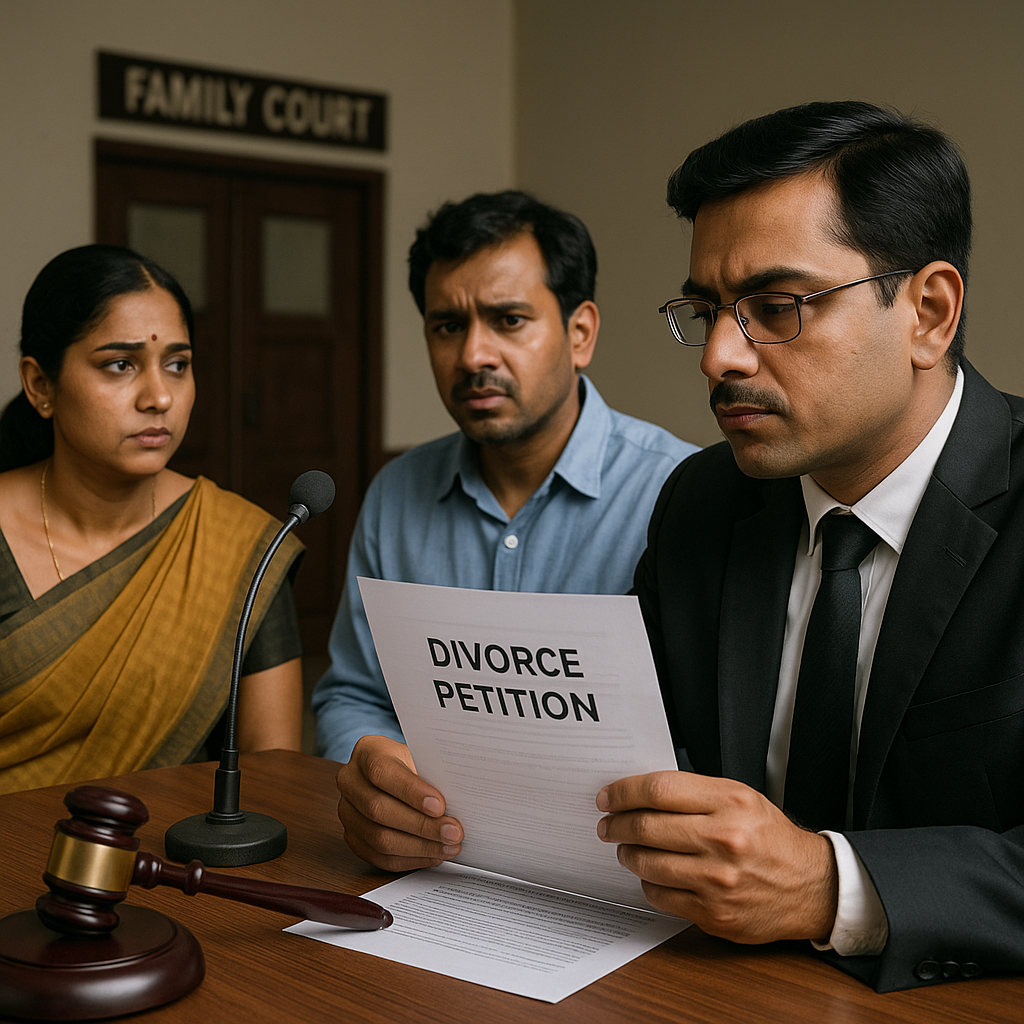
How Language Barriers Complicate Divorce Proceedings in Indian Courts
How Language Barriers Complicate Divorce Proceedings in Indian Courts
Divorce is tough even in the best of times. In India, add in the stress of a Family Court, a pile of legal papers, and suddenly a language you barely read or speak. Now, the whole process feels impossible. Many couples find themselves lost in courtrooms where the judge, the Divorce Lawyer, and even the court clerk speak a language they don’t understand. For people from different states, or even from rural areas, this problem is real. Sometimes, one spouse speaks only Odia, the other Hindi, and the court insists on English. The result? Misunderstandings, delays, and often, justice denied.
This issue – language barriers in divorce court – isn’t just about awkward translation. It can decide who gets custody, who keeps the house, and how quickly a painful chapter finally ends. If you or someone you know is facing a matrimonial dispute, understanding how language issues affect court procedure is essential. Let’s get specific about what actually happens, what to expect, and how to avoid common mistakes.
Quick Answer: How Do Language Barriers Affect Divorce Proceedings in India?
Quick Answer: Language barriers in Indian divorce courts can cause delays, miscommunication, and unfair outcomes. If parties cannot understand court language, they may miss deadlines, misunderstand orders, or struggle to present their case. Legal translation, interpreters, and choosing the right Family Lawyer can help, but the system is far from perfect.
What Are Language Barriers in Indian Divorce Courts?
Language barriers in Indian divorce courts refer to situations where parties, witnesses, or even lawyers do not fully understand the language used during hearings, paperwork, or orders. This is common since India has 22 official languages, but most courts operate in English or the state language.
Court Languages and the Reality on the Ground
Most Family Courts in India use either English or the official state language. For example:
- Delhi Family Courts: English and Hindi
- Tamil Nadu: Tamil and English
- Maharashtra: Marathi and English
- Kerala: Malayalam and English
But many litigants, especially migrants or people from rural backgrounds, may not speak any of these fluently. Courts rarely provide official interpreters unless specifically requested. Even then, the translation may be patchy.
How Language Issues Show Up in Divorce Cases
Language barriers in divorce court show up in a few ways:
- Divorce Petition: The initial paperwork is often in English or state language. If you can’t read it, you may not know what you’re signing.
- Court Hearings: Judges, lawyers, and staff speak in a language you may not follow. You could miss key questions or orders.
- Evidence and Witnesses: Testimony may be in another language. Translation can be slow or inaccurate.
- Orders and Judgments: Final orders are issued in the court’s language. If you can’t read them, you might miss deadlines or misunderstand your obligations.
The Law versus Reality
Officially, the Code of Civil Procedure and Family Courts Act allow for translation and interpreters. In reality, many courts expect you to bring your own interpreter or rely on your Divorce Lawyer. Poor translation can completely change the meaning of testimony or evidence. Honestly, most people only realise this once they’ve already lost time or money.
Why Language Barriers Matter: Real Impact on Divorce Outcomes
Language barriers don’t just make things inconvenient. They shape the outcome of divorce cases in very real ways. If you don’t understand what’s happening, you can’t defend yourself, negotiate, or even agree to a fair settlement.
Delays and Missed Deadlines
- Missed Dates: If you can’t read the court summons or order, you might skip a hearing by mistake. Courts may pass ex parte orders (without your input) if you don’t show up.
- Slow Proceedings: Translation takes time. Interpreters may not be available every hearing. Cases drag on for months or even years.
Unfair Settlements
- Lopsided Agreements: If only one spouse understands the language, they may get a better deal. The other might agree to things without realising the consequences.
- Custody Confusion: Child custody orders need to be clear. If a parent can’t read or understand them, enforcement becomes a mess.
Emotional Stress and Power Imbalance
- Intimidation: Courts feel alien even without a language gap. If you can’t follow the arguments, you feel powerless.
- Dependence on Lawyers: You might rely too much on your Divorce Attorney, even if they’re not explaining things fully. Not all lawyers have the patience to translate every detail.
Example: A Real Case
Consider Sangeeta, a migrant from Jharkhand, who married in Chennai. Her Divorce Petition was in Tamil, a language she didn’t speak. She missed two hearings simply because she couldn’t read the court notice. By the time she found a Family Lawyer who spoke Hindi, the court had already granted interim custody to her husband. This happens more often than you’d think.
Court Procedure and Where Language Barriers Hit Hardest
Court procedure in Indian divorce cases follows a set path, but language issues can trip you up at nearly every step. Understanding where problems usually arise can help you prepare.
1. Filing the Divorce Petition
- The petition is written in English or the state language. If you don’t understand it, you may not know what grounds are being cited or what reliefs are being sought.
- Lawyers sometimes use legal jargon that is difficult even in your own language.
2. Serving Notices and Summons
- Court sends summons in the court’s language. If you can’t read it, you might miss your hearing date.
- Some states require translation, but it’s rarely enforced.
3. Hearings and Evidence
- Oral testimony is recorded in the court’s language. If you or your witnesses speak a different language, the court may ask for an interpreter.
- In reality, sometimes a friend or relative is asked to “help translate,” which is not professional and can lead to mistakes.
4. Arguments and Orders
- Final arguments are presented in the chosen language. If you can’t follow, you might not know what was argued against you.
- Orders and judgments are written in the court’s language. Misunderstandings here can have long-term consequences.
Table: Common Stages Where Language Barriers Cause Issues
| Stage | Typical Language Used | What Can Go Wrong |
|---|---|---|
| Divorce Petition | English/State Lang | Misunderstanding grounds/reliefs |
| Summons/Notices | Court Language | Missing hearings, ex parte orders |
| Hearings/Testimony | Court Language | Inaccurate translation, missing details |
| Arguments | Court Language | Can’t counter arguments |
| Orders/Judgments | Court Language | Misreading final outcome |
How Courts Try to Tackle This
Indian law allows parties to request translation or an interpreter. Some Family Courts, like in Mumbai or Bengaluru, keep a list of approved translators. But:
- You may need to pay extra for a certified translator.
- The quality of translation varies a lot.
- Not all judges are patient about language delays.
If you know a language issue is coming up, mention it to your Divorce Lawyer early. Ask for translation of key documents and request an interpreter for hearings if needed. Don’t wait until you’re already in trouble.
Legal Translation and Interpreters: How They Work (and Where They Fail)
Legal translation is supposed to bridge the gap, but the reality is messy. Translators and interpreters are not always available, and their quality can make or break your case.
Legal Translation in Indian Divorce Courts
- Official Documents: Divorce Petitions, orders, and notices may be translated if requested. Some courts offer this as a service, but most expect your lawyer to arrange it.
- Certified Translators: For evidence or affidavits, courts may require a certified translator. This adds cost and time.
Interpreters During Hearings
- Court-Appointed Interpreters: Rare outside of major metros. In most small towns, you’ll be lucky to find one.
- Ad-hoc Solutions: Sometimes, a lawyer’s assistant or even another litigant is asked to translate. This is risky – important details can get lost.
Common Problems with Legal Translation
- Accuracy: Legal terms may not have direct equivalents. For example, “maintenance” in Hindi could be translated as “bhata,” but the nuance is different.
- Delay: Translating documents takes time. Hearings may be postponed several times.
- Cost: Certified translation is not cheap – fees can range from ₹500 to ₹2,000 per page in some cities.
- Confidentiality: Using unofficial translators can risk your privacy.
Best Practices When Facing a Language Barrier
- Hire a Family Lawyer who speaks your language and is familiar with the local court’s procedures.
- Request translation of all key documents in writing. Don’t rely on verbal promises.
- For important hearings, insist on a certified interpreter, even if you have to pay.
- Double-check all translations for accuracy, especially in affidavits and witness statements.
The Role of Divorce Lawyers and Family Lawyers in Overcoming Language Barriers
A good Divorce Lawyer or Family Lawyer can make a huge difference if language is a problem. But even the best lawyer can’t fix everything if the court is not supportive.
What to Look for in a Lawyer
- Language Skills: Choose a lawyer who speaks your language fluently. Ask for proof or a reference if you’re unsure.
- Experience with Multilingual Cases: Some lawyers specialise in cases where language is a barrier. Ask about previous similar cases.
- Clear Communication: Your lawyer should explain every document and step in simple terms you understand.
How Lawyers Can Help
- Translate and explain all paperwork before you sign.
- Prepare you for hearings by running through possible questions in your language.
- Request court interpreters or translation of orders if needed.
- Advise if an appeal is possible due to a language misunderstanding.
What Lawyers Cannot Do
- Force the court to delay hearings for translation unless there is a strong written request.
- Guarantee the accuracy of unofficial translations.
- Control how judges or court staff react to language delays.
Practical Tips for Clients
- Bring a trusted friend or relative who can interpret, but don’t rely only on them for legal meaning.
- Keep copies of all translated documents.
- If you don’t understand something, say so immediately. Don’t just nod along.
Case Studies: Real-Life Examples of Language Barriers in Indian Divorce Courts
Looking at real cases makes the issue clearer. Here are some examples that show how language can change the course of a divorce.
Case 1: The Punjabi-Tamil Mismatch
A couple married in Delhi, but the wife was from Punjab and the husband from Chennai. When the marriage broke down, the case was filed in Chennai Family Court. The wife spoke only Punjabi and some Hindi. All court documents were in Tamil or English. She missed two hearings and almost lost her right to claim maintenance because she didn’t understand the summons. Only when she got a bilingual Divorce Attorney did she catch up.
Case 2: Rural Migrant in a Metro Court
A man from rural Odisha moved to Mumbai for work. His wife filed for divorce in Mumbai Family Court. The proceedings were in Marathi and English. He spoke only Odia. His Family Lawyer had to translate every order and explain each step. The case dragged for over two years, mainly due to translation delays.
Case 3: Cross-Border Marriage
An NRI couple married in Kerala, lived in the UAE, and filed for divorce in India. The wife’s affidavit was in Arabic, which the court refused to accept until it was officially translated into English and Malayalam. The translation process took six months, and the case was adjourned multiple times.
What These Cases Show
- Language barriers can cause missed hearings, lost claims, and endless delays.
- The right Divorce Lawyer and timely translation are critical.
- Courts don’t always have a standard process for handling different languages.
Common Mistakes and Misconceptions About Language Barriers in Divorce Court
Many people facing divorce are unaware of how badly language issues can affect their case. Some common mistakes make things worse.
Mistakes to Avoid
- Assuming the Court Will Translate Everything: Courts expect you to ask for translation. If you don’t, they won’t provide it.
- Relying Only on Friends or Relatives to Interpret: This is risky. Legal meaning can be lost, and your privacy is at risk.
- Signing Documents You Don’t Understand: Never sign a Divorce Petition or affidavit unless it has been explained in your language.
- Ignoring Court Notices: Even if you can’t read them, get someone to translate every notice immediately.
Misconceptions
- “My Lawyer Will Handle Everything”: Not all lawyers are proactive about language issues. You must ask.
- “Judges Will Be Patient”: Courts are busy. If you miss a deadline or hearing, you may not get a second chance.
- “Translation Is Always Accurate”: Even certified translations can contain errors. Double-check.
What You Should Do Instead
- Be upfront about your language needs from day one.
- Insist on written translations for critical documents.
- Choose a Divorce Attorney who is comfortable in your language and the court’s language.
Best Practices for Dealing With Language Barriers in Indian Divorce Proceedings
There are practical steps you can take to reduce the impact of language barriers. These don’t guarantee a smooth process, but they give you a fighting chance.
Before Filing for Divorce
- Choose a Family Lawyer who speaks your language and understands the local court procedure.
- Prepare all your documents in both your language and the court’s language, if possible.
- Ask for certified translations early to avoid delays later.
During Court Proceedings
- Request an interpreter in writing for every hearing where needed.
- Double-check translated documents before submitting them.
- Keep a diary of all court dates, orders, and notices. Translate them as soon as you receive them.
After the Case
- Make sure you understand the final judgment. If in doubt, ask your lawyer for a plain-language summary.
- If you missed something due to a language barrier, discuss with your lawyer whether you can appeal or request clarification.
Checklist: Avoiding Language Pitfalls in Divorce Court
- Hired a Divorce Lawyer fluent in my language
- All key documents translated and explained
- Interpreter requested for hearings
- Court orders and notices translated
- Never signed what I didn’t understand
Trends and the Future: Addressing Language Barriers in Indian Courts
Indian courts are slowly waking up to the reality that language can be a barrier to justice, especially in matrimonial disputes. Some positive trends are emerging, though progress is slow.
Digital Initiatives
- Some courts now offer online filing in multiple languages.
- E-courts in states like Maharashtra and Tamil Nadu provide translated copies of orders online.
- Video hearings sometimes allow for interpreters to join remotely.
Policy Changes
- The Supreme Court has encouraged High Courts to allow proceedings in the local language.
- Some states are training court staff in multiple languages.
- Legal aid clinics now offer translation help, though coverage is patchy.
What Still Needs Improvement
- Standardised national policy for translation and interpretation in Family Courts.
- More funding for certified translators and interpreters.
- Better awareness among lawyers and litigants about language rights.
Honest Reality
Progress is slow, and much depends on the attitude of individual judges and lawyers. If you or someone you know is facing a language barrier in divorce court, don’t wait for the system to fix itself – take proactive steps.
Frequently Asked Questions
What is a language barrier in Indian divorce court?
A language barrier in Indian divorce court means that one or both parties cannot understand the language used for hearings, documents, or orders – usually English or the state language. This makes it hard to follow proceedings, respond to questions, or understand judgments.
How do language barriers affect divorce proceedings?
Language barriers cause delays, missed deadlines, and misunderstandings. People may not understand their rights, court orders, or the Divorce Petition. This can lead to unfair settlements, lost opportunities, or even ex parte judgments.
Can I request an interpreter in Family Court?
Yes, you can request an interpreter in Family Court. Submit a written request through your Divorce Lawyer before the hearing. The court may provide an interpreter or allow you to bring your own, but availability varies by location.
How do I get court documents translated?
Ask your Family Lawyer to arrange certified legal translation for important documents like petitions, affidavits, and orders. In some states, the court may offer translation services, but you may need to pay extra and request in writing.
What happens if I miss a hearing due to language issues?
If you miss a hearing because you didn’t understand the notice, the court may pass an ex parte order. You can apply to set it aside, but you must explain the language barrier and provide evidence, like a translation request.
Is it better to hire a lawyer who speaks my language?
Yes, hiring a Divorce Lawyer who speaks your language makes the process much smoother. They can explain documents, translate orders, and represent your interests more effectively.
Are there legal rights to translation in Indian courts?
Indian law allows for translation and interpreters if requested, but it is not automatic. Courts may not provide translation unless you ask, so be proactive about your language needs.
How much does legal translation cost in India?
Legal translation costs vary by city and language. Certified translation can range from ₹500 to ₹2,000 per page for court documents. Interpreter fees depend on duration and expertise.
What is the process to request an interpreter in Family Court?
- Inform your Divorce Lawyer about your language needs.
- Submit a written request to the court before the hearing.
- Confirm if the court will provide an interpreter or if you need to arrange one.
- Arrive early on hearing day to coordinate with the interpreter.
Can a friend or relative act as my interpreter?
Courts sometimes allow friends or relatives to interpret, but this is not ideal. Legal meaning can be lost, and confidentiality may be at risk. Certified interpreters are safer for important hearings.
What should I do if I don’t understand a court order?
Ask your lawyer to translate and explain the order immediately. Do not ignore it. If you still have doubts, request a plain-language summary or official translation.
Does language barrier affect child custody decisions?
Yes, if a parent cannot understand custody orders, it can lead to confusion and enforcement problems. Accurate translation is essential for fair custody arrangements.
Which Indian states have the best support for non-local languages in Family Courts?
Metro cities like Mumbai, Delhi, and Bengaluru offer better access to interpreters and translators. Rural or smaller courts may have limited support, so plan ahead.
How do I avoid mistakes due to language issues in divorce court?
- Hire a bilingual Divorce Lawyer
- Request translations for all documents
- Ask for an interpreter for hearings
- Double-check everything before signing
Can I appeal a divorce judgment if I didn’t understand the proceedings?
You may be able to appeal or ask for a review if you can show that language barriers prevented you from participating fully. Consult your lawyer about the process and deadlines.
Key Takeaways
- Language barriers in divorce court can cause delays, unfair outcomes, and emotional stress.
- Indian Family Courts usually operate in English or the state language, which many litigants may not understand.
- Legal translation and interpreters are available, but you must request them in writing and often pay extra.
- Choosing a Divorce Lawyer who speaks your language helps avoid critical mistakes.
- Never sign any document you don’t fully understand.
- Courts rarely provide automatic translation for notices or orders – always ask.
- Delays in translation can stretch cases for months or years.
- Translation errors can change the meaning of testimony or evidence.
- Friends or relatives as interpreters are risky for legal matters.
- Be proactive: request translation, keep records, and double-check everything.
Conclusion
Language barriers make an already difficult divorce process even harder in Indian courts. From missed hearings to misunderstood orders, the impact can be serious and long-lasting. While legal translation and interpreters offer some help, the system is patchy and slow to improve. If you’re facing a matrimonial dispute and don’t fully understand the court language, take action early – get the right Family Lawyer, request translation, and never sign anything blindly.
The justice system is slowly waking up to the problem of language barriers in divorce court, but for now, the burden falls mostly on litigants. Stay informed, be vigilant about your rights, and don’t be afraid to ask for help. Understanding the process is your best defence.
