


Legal Separation and Reconciliation: the Grey Areas
Separation is rarely a clean break. In Chandigarh, couples who consider legal separation often find themselves navigating a landscape filled with uncertainty, hope, and complex legal requirements. Some want a pause to reflect, while others see separation as a step towards divorce. But what about those who want to try again after a formal split? The legal framework around separation and reconciliation is often misunderstood, especially when emotions run high and the law seems ambiguous.
The topic matters because a misstep during legal separation can have lasting consequences for property, custody, and even the right to seek alimony. Understanding the boundaries between separation, reconciliation, and divorce is crucial for anyone in Chandigarh facing these choices. Legal separation in Chandigarh is not just a legal formality – it shapes rights, obligations, and the possibility of a future together, or apart.
This article addresses the real grey areas: what a legal separation means under Indian law, how reconciliation attempts affect proceedings, and why the process is more than just a waiting period. If you are considering a trial separation, or want to know how a separation agreement impacts your rights, you will find clear, practical answers here.
In Chandigarh, legal separation is a formal process under Indian law that allows married couples to live apart and resolve financial, custody, and property issues without immediately ending the marriage. Reconciliation is possible during or after separation, but it involves specific legal steps and may impact ongoing proceedings.
Legal Separation and Reconciliation: Understanding the Grey Areas in Chandigarh
Key takeaways
– Legal separation in Chandigarh is granted by court order under the Hindu Marriage Act, 1955, and other personal laws.
– A separation agreement can address property, maintenance, and custody but does not dissolve the marriage.
– Reconciliation attempts are encouraged by courts and can halt or modify ongoing proceedings.
– Temporary maintenance and custody arrangements are possible during separation.
– Trial separations, mediation services, and counseling are available to support reconciliation.
– Resuming cohabitation after legal separation may require formal withdrawal of proceedings.
– Legal separation is different from divorce; reconciliation has different effects in each case.
– Costs, timelines, and procedures vary by case and court in Chandigarh.
– Legal advice is recommended before entering a separation agreement or attempting reconciliation.
– Recent judgments and statutory amendments affect how separation and reconciliation are treated in Punjab and Haryana.
What is Legal Separation in Chandigarh?
Legal separation in Chandigarh refers to a court-recognised process where a married couple is permitted to live apart without ending the marriage. The main law governing this is Section 10 of the Hindu Marriage Act, 1955, which allows for a decree of judicial separation. This is distinct from an informal or mutual agreement to live apart. The court order suspends the duty to cohabit but retains the marital bond, and either spouse can later file for divorce if reconciliation fails.
Judicial Separation: The Legal Framework
Judicial separation is a statutory remedy. Under Section 10 of the Hindu Marriage Act, 1955, either spouse may apply to the District Court in Chandigarh for judicial separation on grounds similar to those for divorce (such as cruelty, adultery, or desertion). The court may grant a decree if satisfied, allowing the parties to live apart. The marriage, however, is not dissolved. For Christians, similar relief is available under Section 22 of the Indian Divorce Act, 1869. For Muslims, there is no formal judicial separation, but similar arrangements can be made under personal law.
Essential Ingredients and Process
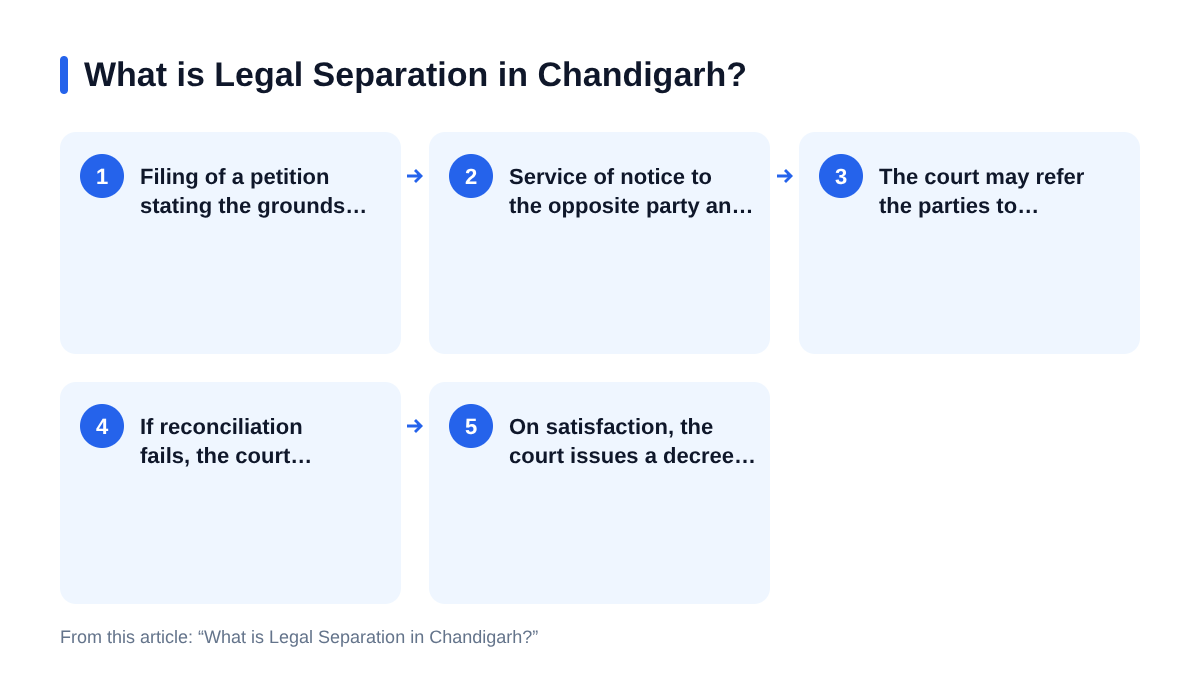
To obtain legal separation in Chandigarh, the following steps usually apply:
- Filing of a petition stating the grounds for separation, supported by affidavits and evidence.
- Service of notice to the opposite party and a chance to file a written statement.
- The court may refer the parties to counseling or mediation services, especially if reconciliation seems possible.
- If reconciliation fails, the court examines evidence and arguments.
- On satisfaction, the court issues a decree of judicial separation.
A key point: judicial separation does not grant a divorce. The parties remain legally married but are no longer required to live together.
Separation Agreement: Practical Aspects
A separation agreement is a written contract between spouses outlining terms for living apart, child custody, maintenance, and division of property. While not mandatory under Indian law, such agreements are increasingly recognised by courts as evidence of mutual intention. However, they cannot override statutory rights, especially regarding maintenance or custody, which remain subject to court approval. In Chandigarh, well-drafted separation agreements can help avoid disputes and set clear expectations, but legal advice is strongly recommended before signing.
How Does Reconciliation Work During Legal Separation?
Reconciliation during legal separation in Chandigarh is not only possible, but actively encouraged by the courts. The law and the judiciary view marriage as a social institution worth preserving, and several mechanisms exist to support couples who wish to try again. However, the timing, method, and legal effects of reconciliation attempts are often misunderstood.
Reconciliation can pause or terminate legal separation proceedings if both parties agree to resume cohabitation. The court may facilitate this through counseling or mediation, and a formal request is usually required to withdraw the petition.
Court-Directed Reconciliation and Counseling
Under Section 23(2) of the Hindu Marriage Act, 1955, courts must make every effort to bring about reconciliation before granting judicial separation or divorce. In Chandigarh, Family Courts often refer parties to court-appointed counselors or mediation services. These sessions provide a neutral environment to discuss issues, clarify misunderstandings, and explore the possibility of continuing the marriage.
- Counseling in divorce and separation: Trained counselors help couples communicate, address grievances, and consider the long-term consequences of separation. Sessions are confidential and non-binding.
- Mediation services: Accredited mediators facilitate negotiation on disputed issues such as property, maintenance, or child custody. Mediation is voluntary and may result in a written settlement.
If reconciliation is achieved, the parties can file a joint application to withdraw the separation petition. The court will record the settlement and restore marital rights. If not, proceedings resume.
Reconciliation Attempts: Timing and Legal Consequences
Reconciliation can occur at any stage before the final decree is passed. If parties resume cohabitation after judicial separation, Section 10(2) of the Hindu Marriage Act allows for the decree to be rescinded on joint application. However, if reconciliation happens after a divorce decree, a fresh marriage is required to restore legal status.
A common error is assuming that informal cohabitation automatically cancels legal separation. In reality, a formal application is needed to set aside the decree. Otherwise, legal rights and obligations remain frozen at the time of separation.
Role of Lawyers and the Court
Advocates play a key role in guiding clients through the process, drafting applications, and representing interests during mediation. The Family Court ensures that any settlement is fair and not the result of coercion. In high-conflict cases, specialist lawyers may be needed – as discussed in When a High-Conflict Divorce Demands More Than Standard Legal Advice.
What Are the Legal and Practical Effects of Legal Separation?
The legal consequences of separation in Chandigarh are significant. Judicial separation suspends certain marital rights and obligations but leaves others intact. Couples must understand how property, maintenance, and child custody are handled during this period, and what happens if reconciliation fails.
Legal separation affects property rights, maintenance, and child custody, but does not dissolve the marriage. Rights to inheritance and remarriage remain unchanged unless a divorce is granted.
Property and Financial Arrangements
During separation, the couple may continue to co-own property, but joint rights are often frozen. A separation agreement can specify who stays in the family home, how expenses are shared, and who pays debts. However, such agreements cannot override statutory entitlements, especially for the wife and children under Section 125 of the Code of Criminal Procedure, 1973 (now relevant provisions under the Bharatiya Nagarik Suraksha Sanhita, 2023).
Temporary maintenance or alimony may be ordered by the court to ensure that the financially weaker spouse is not left destitute. The amount depends on factors such as income, standard of living, and needs of the children. A typical range in Chandigarh Family Court cases is Rs. 10,000 to Rs. 50,000 per month, but amounts vary widely.
Child Custody and Visitation
Child custody during legal separation is determined based on the child’s welfare, not parental preference. Temporary custody orders can be issued, with visitation rights for the non-custodial parent. Courts in Chandigarh often encourage shared parenting if feasible. For a deeper look at custody disputes, see Child Custody Battles in Chandigarh: What Most Parents Overlook.
Inheritance and Remarriage
Legal separation does not affect inheritance rights. Spouses remain legal heirs under the Hindu Succession Act, 1956, or other personal laws, unless a divorce is granted. Remarriage is not permitted during separation; doing so constitutes bigamy under Section 494 of the Indian Penal Code, 1860 (now under the Bharatiya Nyaya Sanhita, 2023). Only a decree of divorce ends the marriage and allows remarriage.
Common Mistakes and Misconceptions
A frequent mistake is assuming that legal separation is a quick path to divorce or that it automatically changes property titles. In reality, separation is a pause, not a termination. Rights and obligations remain unless specifically addressed by court order or agreement. Another misconception is that reconciliation wipes out all legal consequences; in fact, proper documentation is required to restore marital status fully.
Legal Separation vs. Divorce: Key Differences and Overlaps
Legal separation and divorce are often confused, but they have distinct legal meanings and consequences in Chandigarh. Understanding these differences is essential before making life-altering decisions.
Legal separation is a court-ordered right to live apart without ending the marriage, while divorce dissolves the marriage completely and allows remarriage. Both have different effects on property, rights, and future options.
| Point of Difference | Legal Separation (Judicial Separation) | Divorce |
|---|---|---|
| Marital Status | Remain married | Marriage dissolved |
| Right to Remarry | No | Yes |
| Inheritance Rights | Remain intact | Usually lost |
| Property Division | May be addressed by agreement or order | Final, in the decree |
| Maintenance/Alimony | Temporary or ongoing | Final, as per order |
| Custody/Visitation | Temporary, revisable | Permanent, unless modified |
| Scope for Reconciliation | High; proceedings can be halted | Only by remarriage |
| Filing in Chandigarh | Under Section 10 HMA, 1955 | Under Section 13 HMA, 1955 |
If reconciliation is likely, legal separation offers a less drastic alternative. However, unresolved issues may resurface unless handled with care. Divorce is final, and reversing it requires a new marriage ceremony.
Trial Separation, Counseling, and the Role of Mediation
Couples in Chandigarh often want to test the waters before seeking legal separation or divorce. Trial separation, counseling, and mediation are practical tools that can clarify intentions and reduce conflict, but their legal status differs from formal separation.
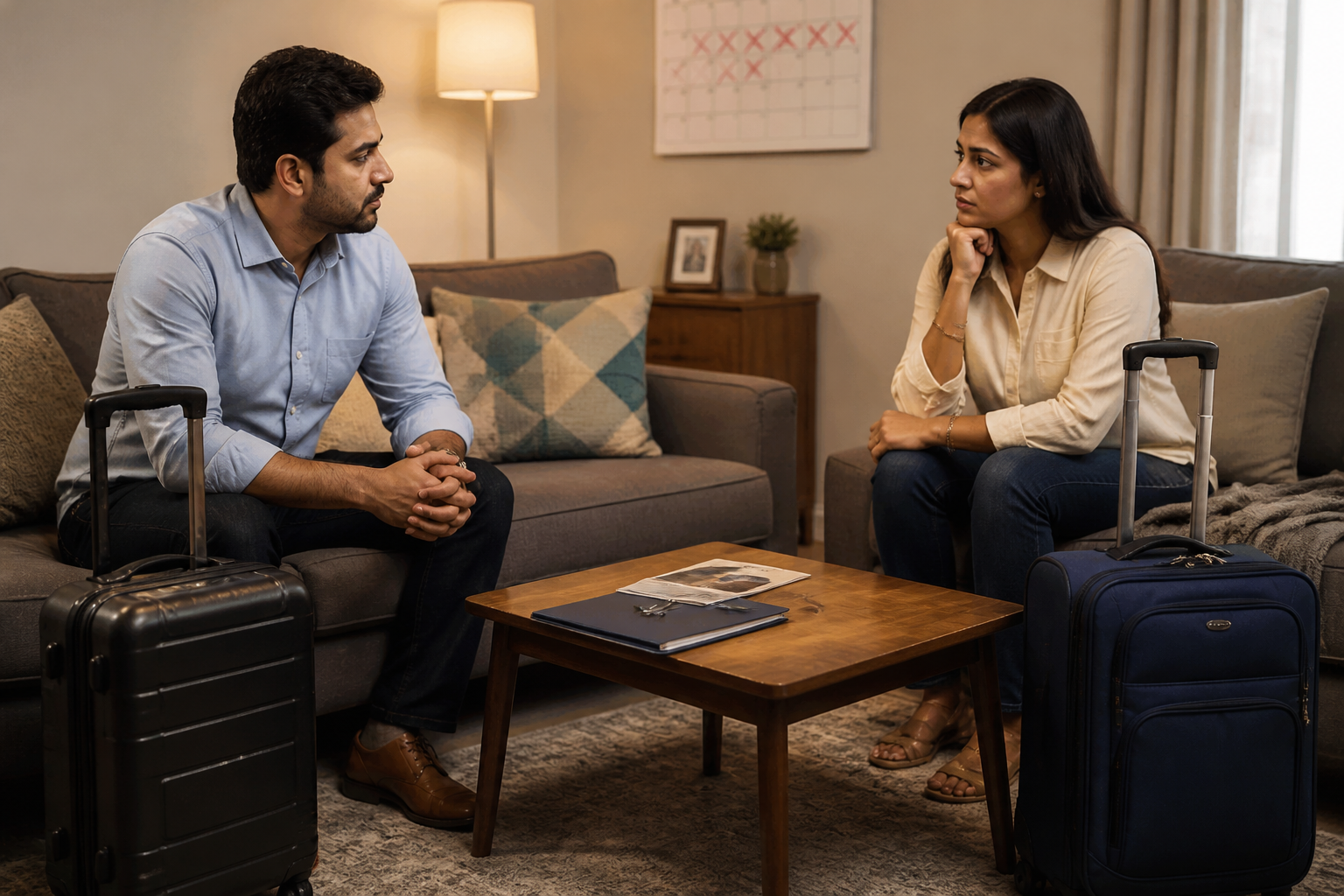
A trial separation is an informal arrangement to live apart without court intervention. Counseling and mediation services in Chandigarh Family Courts can help couples resolve issues or decide whether to proceed with legal separation.
Trial Separation: Informal but Useful
A trial separation involves living apart for a fixed period, usually by mutual agreement. There is no court order, and the marital bond remains unchanged. Couples use this time to reflect, seek counseling, or negotiate terms for a possible formal separation. However, trial separation does not affect legal rights or obligations, and any financial or property arrangements are unenforceable unless formalised.
Counseling in Divorce and Separation
Chandigarh Family Courts have in-house counselors and often refer parties for counseling before proceeding to litigation. Sessions may be held at the court’s mediation centre or with accredited private counselors. Counseling is confidential and non-binding, but the court may consider reports when making custody or maintenance decisions.
Mediation Services: Resolving Disputes Amicably
Mediation is a structured process where a neutral third party helps spouses negotiate a settlement. Chandigarh has dedicated mediation centres attached to Family Courts. Mediation can address property, maintenance, custody, and even pave the way for reconciliation. If successful, the settlement is recorded by the court and becomes enforceable. If not, the case proceeds to trial.
When to Choose Trial Separation or Formal Legal Separation
- Trial separation is best for couples who are unsure and want flexibility. It is informal and carries no legal effect.
- Legal separation is appropriate when one or both parties want legal certainty, enforceable rights, and the option to seek divorce if reconciliation fails.
Legal advice is recommended before moving from trial to formal separation, as the implications differ significantly.
Reconciliation Attempts: Legal Procedures and Practical Tips
Reconciliation is not just a matter of moving back in together. In Chandigarh, there are specific legal steps to follow if a separated couple wants to resume cohabitation or withdraw legal proceedings. Failure to follow these steps can create complications later, especially regarding property and custody.
To formally reconcile during or after legal separation, couples should file a joint application with the court to withdraw or rescind the separation decree. Informal resumption of cohabitation may not restore all legal rights.
Step-by-Step Process for Reconciliation During Separation
- Both parties agree to reconcile and resume marital relations.
- File a joint application before the same Family Court seeking withdrawal of the judicial separation petition or rescission of the decree (under Section 10(2) HMA, 1955).
- The court verifies that the reconciliation is genuine and not the result of coercion or fraud.
- On satisfaction, the court passes an order withdrawing proceedings and restores marital rights.
- If there are children, the court may review and modify custody or maintenance orders as needed.
If the couple had entered into a separation agreement, it is advisable to record any changes or revocations in writing. This helps avoid disputes about property or financial arrangements later.
Practical Tips for Effective Reconciliation
- Communicate openly about expectations and boundaries before resuming cohabitation.
- Seek counseling or mediation to resolve lingering issues, especially in high-conflict situations.
- Document the reconciliation and inform relevant authorities (such as banks, employers, or schools) if arrangements for children or property are being reversed.
- Consult a qualified advocate in Chandigarh for guidance on legal procedures and paperwork.
A common mistake is ignoring the legal process and simply moving back together. This can leave unresolved legal issues that may resurface if disputes arise in the future.
Costs, Timelines, and Local Practices in Chandigarh
The cost and duration of legal separation or reconciliation in Chandigarh depend on several factors, including complexity, court workload, and whether the process is contested. Knowing what to expect can help couples plan better and avoid surprises.
Legal separation in Chandigarh typically takes 6 to 18 months to resolve, with costs ranging from Rs. 30,000 to Rs. 2 lakh for most cases. Mediation and counseling services may reduce costs and delays.
Typical Costs and Fees
- Court Fees: Filing a judicial separation petition in Chandigarh courts costs between Rs. 200 and Rs. 1,000, depending on the relief sought.
- Lawyer’s Fees: Legal fees vary widely. For uncontested separation, fees range from Rs. 20,000 to Rs. 60,000. Contested cases or those involving property and custody disputes may cost upwards of Rs. 1 lakh.
- Mediation and Counseling: Court-appointed counseling is usually free or nominally charged. Private counselors charge Rs. 1,000 to Rs. 3,000 per session.
Timelines
- Uncontested cases: 6-9 months for a judicial separation decree if both parties cooperate.
- Contested cases: 12-18 months or more, especially if property, maintenance, or custody is disputed.
- Reconciliation attempts: Counseling and mediation may take 1-3 months. Withdrawing or rescinding a decree can be completed in 2-4 weeks if both parties agree.
Local Practices and Recent Trends
Chandigarh Family Courts actively encourage mediation and counseling before proceeding to trial. Judges may grant multiple adjournments to allow for reconciliation. Recent judgments from the Punjab and Haryana High Court have emphasised the importance of fair maintenance and the welfare of children during separation.
For more on how experienced advocates influence outcomes, see Chandigarh Divorce Lawyers Who Shift the Balance in Matrimonial Disputes.
Frequently Asked Questions
What is the difference between legal separation and divorce in Chandigarh?
Legal separation allows a married couple to live apart by court order without ending the marriage, while divorce dissolves the marriage completely and permits remarriage. Legal separation retains inheritance and marital rights, whereas divorce ends all such rights.
How do I file for legal separation in Chandigarh?
To file for legal separation, submit a petition for judicial separation under Section 10 of the Hindu Marriage Act, 1955, to the Family Court in Chandigarh, citing valid grounds such as cruelty or desertion. The process involves filing, notice to the spouse, counseling or mediation, and a court hearing.
Can reconciliation attempts stop divorce or separation proceedings?
Yes. If both parties agree to reconcile, ongoing separation or divorce proceedings can be halted or withdrawn by filing a joint application in court. The court will verify the genuineness of the reconciliation before passing an order.
What is a separation agreement, and is it legally binding?
A separation agreement is a written contract between spouses outlining terms for living apart, property division, maintenance, and custody. While not mandatory or fully binding, courts in Chandigarh often recognise such agreements as evidence of mutual intent, subject to statutory rights and fair terms.
How long does legal separation take in Chandigarh?
Uncontested legal separation cases in Chandigarh usually take 6-9 months, while contested cases may last 12-18 months or longer. Delays are common if property, custody, or maintenance is disputed.
Does legal separation affect child custody and maintenance?
Yes. The court may issue temporary custody and maintenance orders during legal separation, prioritising the child’s welfare and the financial needs of both parties.
Can we live together again after legal separation?
Yes. If both spouses wish to resume cohabitation, they must file a joint application with the court to rescind the judicial separation decree. Informal reconciliation is not enough to restore legal rights.
What are the typical costs of legal separation in Chandigarh?
Typical costs range from Rs. 30,000 to Rs. 2 lakh, including court fees, advocate’s fees, and incidental expenses. Mediation or counseling may reduce overall costs.
Is trial separation recognised by law in Chandigarh?
Trial separation is an informal arrangement and is not recognised by law in Chandigarh. It carries no legal effect unless formalised through a separation agreement or court order.
What happens to property during legal separation?
Property rights are typically frozen during legal separation. A separation agreement or court order can specify who occupies the home and how expenses or debts are shared, but property ownership does not change unless agreed or ordered.
Is counseling mandatory before legal separation?
Counseling is not strictly mandatory but is strongly encouraged by Chandigarh Family Courts. Courts often refer couples to mediation or counseling before proceeding with litigation.
How does legal separation impact inheritance rights?
Legal separation does not affect inheritance rights. Spouses remain legal heirs until a divorce decree is granted.
Can a spouse remarry after legal separation?
No. Remarriage is only permitted after a decree of divorce, not during legal separation. Doing so during separation is considered bigamy and is punishable under law.
What is the role of mediation services in legal separation?
Mediation services in Chandigarh help couples negotiate settlements on property, maintenance, and custody, and often support reconciliation. If a settlement is reached, it is recorded in court and becomes enforceable.
How do I withdraw a legal separation case after reconciliation?
To withdraw a legal separation case, both parties must file a joint application before the same Family Court, requesting withdrawal or rescission of the decree. The court will verify the reconciliation and pass an appropriate order.
Key Insights for Chandigarh Couples Facing Separation or Reconciliation
- Legal separation in Chandigarh is a formal court process, not an informal arrangement.
- Judicial separation does not end the marriage or permit remarriage.
- Separation agreements can clarify terms but must align with statutory rights.
- Reconciliation is possible at any stage before divorce and requires formal court action.
- Counseling and mediation are actively encouraged by Chandigarh Family Courts.
- Child custody and maintenance are decided based on the child’s welfare during separation.
- Property rights remain unchanged unless modified by court order or agreement.
- Trial separations have no legal effect unless formalised.
- Costs and timelines vary; legal advice is essential for complex cases.
- Recent legal reforms and judgments in Punjab and Haryana affect procedures.
- Informal reconciliation does not restore legal rights without court approval.
- Remarriage is only allowed after a valid divorce decree.
- Mediation services can resolve disputes and support reconciliation.
- Mistakes in documentation or process can have lasting legal consequences.
- Specialist legal counsel may be needed in high-conflict or complex cases.
The Path Forward: Navigating Separation and Reconciliation in Chandigarh
Legal separation in Chandigarh is not just a pause but a structured process with lasting effects on finances, family, and the future. Reconciliation remains an option at almost every stage, but it requires careful legal steps and clear communication. Couples should weigh the benefits and risks of separation, consult experienced advocates, and make use of mediation or counseling services to avoid common pitfalls.
While the law provides avenues for both separation and reconciliation, the process is rarely simple. Every case is unique, shaped by personal, financial, and legal considerations. Those facing these choices should approach each step with clarity and seek reliable guidance.
This article is general information, not legal advice.
