


When Custody Battles Get Messy: Real-World Courtroom Tactics in India
Custody battles in India often bring out the most difficult aspects of family law. Parents find themselves fighting for the right to raise their own children, sometimes amid intense personal allegations and complex legal strategies. The courtroom becomes a stage for both emotional appeals and hard evidence. For many, the process is overwhelming, with the child’s welfare sometimes lost in the fog of litigation.
Why does this matter? Because the outcome of a custody dispute shapes not just a child’s childhood but their entire future. One wrong move, a missing document, or a misunderstood allegation can tip the scales. It’s not just about legal rights – it’s about a child’s day-to-day life. Knowing how custody battles unfold, what evidence matters, and what tactics are used is critical for any parent or guardian facing this challenge.
Navigating custody battles in India requires a clear understanding of the law, sharp courtroom strategies, and a relentless focus on child welfare. The legal process is adversarial, often involving serious allegations, questions about parental fitness, and sometimes even false claims. Legal representation and the role of evidence – including expert input from child psychologists – can make or break a case.
In Indian custody battles, courts decide who will have custody of a child by focusing on the child’s welfare above all else, weighing evidence, parental fitness, and any allegations made, with the help of legal representatives and sometimes expert opinions.
Inside India’s Custody Battles: Tactics, Evidence, and the Child’s Best Interests
Key takeaways
- Indian courts prioritise the child’s welfare over parental rights in custody battles.
- Evidence such as school records, medical reports, and witness statements is crucial.
- Courts evaluate allegations, parental fitness, and sometimes false claims carefully.
- Child psychologists may be appointed to assess the child’s mental and emotional state.
- Legal representation is essential for navigating complex courtroom strategies.
- Interim custody can be awarded during ongoing proceedings.
- False allegations can lead to penalties or affect the accuser’s case.
- The process is adversarial, with both sides presenting their strongest case.
- High Courts and the Supreme Court set important precedents in custody matters.
- Mediation and settlement are encouraged but not always possible.
What Are Custody Battles in Indian Family Courts?
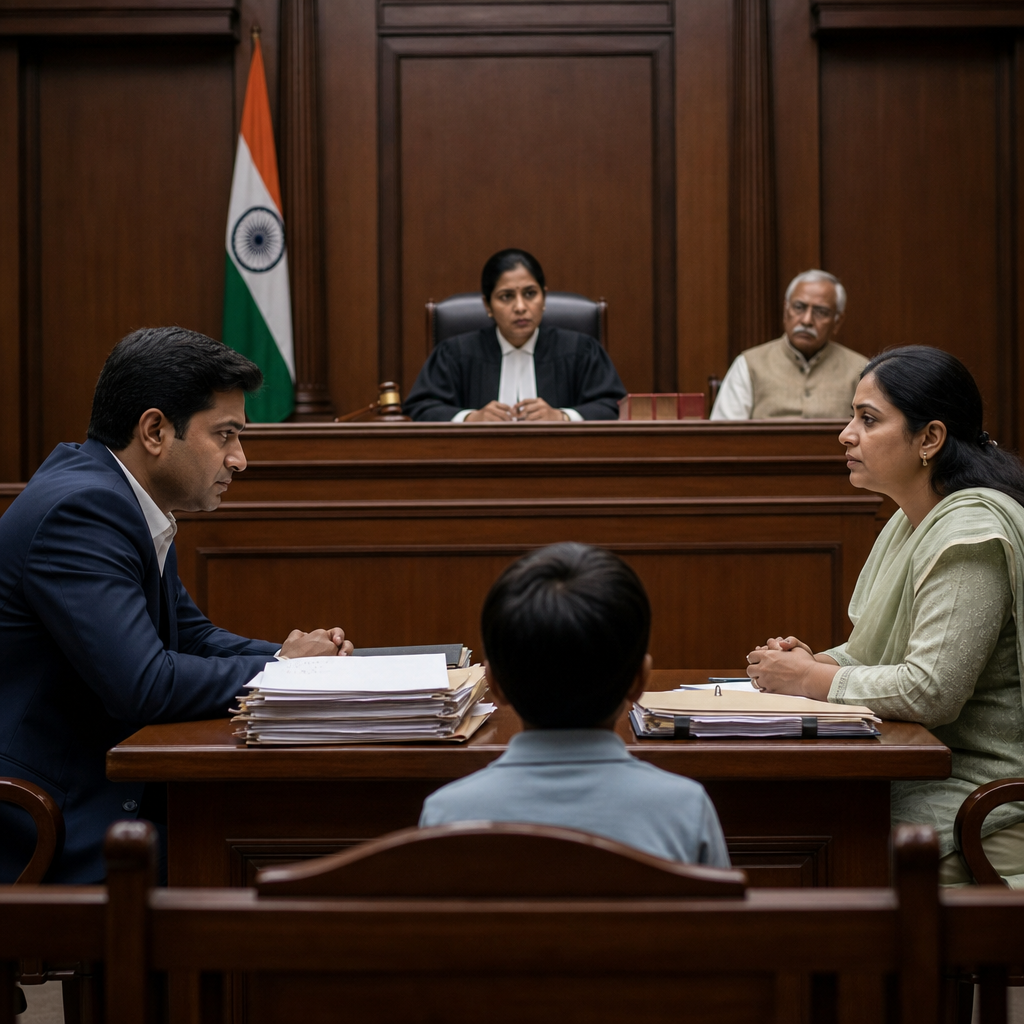
Custody battles are legal disputes between parents or guardians over the care and control of a child after separation or divorce. In India, the law treats custody as a question of the child’s best interests, not the parents’ entitlements. Courts examine each case individually, looking beyond the surface to determine what will truly serve the child’s welfare.
Legal Definitions and Types of Custody
The term ‘custody’ refers to the legal right to make decisions about and care for a child. Indian law recognises several forms:
- Physical custody: The child lives with the custodial parent, but the non-custodial parent may have visitation rights.
- Legal custody: The right to make major decisions about the child’s education, health, and welfare.
- Joint custody: Both parents share custody, either by alternating physical custody or jointly making decisions.
- Third-party custody: In rare cases, custody may be granted to a grandparent or another relative if both parents are unfit.
The Guardians and Wards Act, 1890, and the Hindu Minority and Guardianship Act, 1956, are the primary statutes governing custody for most children in India. For Muslim, Christian, and Parsi families, different personal laws may apply, but the principle of the child’s welfare remains central. For detailed legal context, see Child Custody Laws in India: Legal Realities, Challenges, and Strategic Insights.
When Do Custody Battles Arise?
Custody disputes usually begin during divorce proceedings or after a breakdown in the parental relationship. Sometimes, extended family members seek custody if both parents are absent or deemed unfit. The process can be triggered by mutual agreement, but more often it starts with one parent filing an application in the family court.
The Legal Test: Best Interests of the Child
Indian courts apply the ‘best interests of the child’ test, considering:
- The child’s age, gender, and special needs.
- The emotional bond between child and each parent.
- Each parent’s financial stability and capacity to provide care.
- The child’s wishes, if old enough to express a preference.
- Any history of abuse, neglect, or substance misuse.
No single factor is decisive. The court weighs all evidence before making a decision.
How Do Courts Decide Custody: Legal Process and Key Considerations
Courts in India decide custody based on what is best for the child, not simply who wants custody more. The process is detailed, involving several stages and a careful review of all relevant facts and evidence.
The Custody Application and Initial Hearings
A custody battle typically begins when one parent files an application under the Guardians and Wards Act, 1890 (Section 7 or 25), or the Hindu Minority and Guardianship Act, 1956. The court issues notice to the other parent and schedules an initial hearing. At this stage, interim custody or visitation rights may be granted to ensure the child’s immediate welfare.
Evidence in Custody Cases: What Matters Most?
Courts rely on a wide range of evidence to determine custody, including:
- School records: Attendance, performance, and any behavioural issues.
- Medical and psychological reports: Health status, any special needs, and emotional well-being.
- Witness statements: Testimony from relatives, teachers, or neighbours about the child’s environment.
- Financial documents: Proof of income, assets, and living conditions.
- Photographs, videos, and correspondence: Evidence of daily care or parent-child interaction.
Judges may also meet the child in chambers (private office) to understand their wishes, especially if the child is 9 years or older. However, the child’s preference is not binding and is only one of many factors considered.
The Role of Interim Orders
Family courts can issue interim orders for custody, visitation, or maintenance during the pendency of the case. These orders are temporary and may be revised as more evidence is presented. Interim custody is common, especially in cities where cases can last months or even years.
Table: Key Stages in a Typical Custody Battle
| Stage | Purpose | Typical Duration |
|---|---|---|
| Application & Notice | Initiate proceedings, inform other parent | 2 – 4 weeks |
| Interim Custody Hearing | Decide temporary arrangements | 1 – 2 months |
| Evidence & Witnesses | Present documents, cross-examination | 3 – 12 months |
| Child Interview/Assessment | Judge meets child, may appoint psychologist | 1 – 2 months |
| Final Arguments | Both sides present closing arguments | 1 – 2 months |
| Final Order | Judge issues detailed custody order | After all prior steps |
Delays are common, especially if parties file appeals or repeat allegations. Many cases stretch beyond a year, particularly in metropolitan courts.
Parental Fitness and Allegations
Parental fitness is a central issue. Courts examine whether each parent can provide a stable, nurturing home. Allegations of abuse, neglect, alcoholism, or mental illness can heavily influence the outcome. However, the court requires credible evidence before acting on such claims. Unsupported or false allegations can backfire, damaging the accuser’s credibility and affecting their chances of gaining custody.
What Evidence Is Most Persuasive in Indian Custody Battles?
The outcome of custody cases in India often hinges on the quality and relevance of evidence each parent presents. Judges look beyond surface claims and scrutinise the details. Knowing what evidence is most persuasive – and how it is evaluated – can change the trajectory of a case.
Types of Evidence Considered
Courts accept a broad range of evidence, but some types carry more weight:
- School and academic reports: Demonstrate the child’s adjustment and parental involvement.
- Medical records: Prove physical and mental health status of both child and parents.
- Home visit reports: Some courts request a home study by a probation officer or social worker.
- Expert opinions: Child psychologists may be appointed to assess the child’s emotional needs.
- Police or FIR records: Relevant if abuse or neglect is alleged.
- Photographic or video evidence: Shows the child’s living conditions or daily routine.
Role of Child Psychologist in Custody Cases
A court may appoint a child psychologist to evaluate the child’s mental and emotional state. The psychologist’s report can include:
- The child’s attachment to each parent.
- The child’s stated preferences and the reasons behind them.
- Any signs of trauma, anxiety, or manipulation.
These expert reports are influential but not binding. Judges use them alongside other evidence to reach a decision.
How Is Evidence Challenged?
Evidence in custody cases is subject to cross-examination. A parent may:
- Question the credibility or qualifications of an expert.
- Dispute the accuracy of documents (e.g., forged medical records).
- Present counter-evidence or witnesses.
- Argue that evidence is irrelevant or obtained improperly.
Courts are careful, but sometimes genuine evidence is overlooked or misinterpreted, especially in high-conflict cases. It’s wise to prepare thoroughly and anticipate how the other side might attack your evidence.
Common Mistakes in Presenting Evidence
- Submitting incomplete or outdated records.
- Relying on hearsay (second-hand information) instead of direct testimony.
- Making exaggerated or unsubstantiated claims.
- Failing to update the court about significant changes (e.g., change in residence or employment).
Evidence must be timely, relevant, and credible. Overlooking these details can weaken even a strong case.
What Courtroom Strategies Succeed in Indian Custody Disputes?
Winning a custody battle in India is rarely about theatrics. The most effective courtroom strategies are grounded in preparation, credibility, and a focus on the child’s best interests. Lawyers and litigants must understand both the law and the practical realities of family court.
Legal Representation: Why It Matters
While self-representation is allowed, most parents engage experienced family law advocates. A skilled lawyer knows how to:
- Frame the narrative in terms of the child’s welfare, not parental grievances.
- Anticipate and neutralise the other side’s allegations.
- Present evidence in a logical, admissible manner.
- Advise clients on conduct inside and outside court.
Advocates also help negotiate settlements or mediation, which can spare the child and family further trauma.
Tactics Commonly Used in Court
Some common courtroom strategies include:
- Filing for interim relief: Requesting temporary custody or visitation quickly, especially where immediate harm is alleged.
- Seeking an in-camera interview: Asking the judge to speak privately with the child to gauge their wishes.
- Highlighting continuity and stability: Emphasising the child’s need for a stable environment, especially if they are settled in a particular school or community.
- Addressing allegations head-on: Promptly refuting false claims with documents or witness testimony.
- Using expert witnesses: Bringing in child psychologists or social workers for independent assessment.
The most successful litigants keep the focus on the child, not on scoring points against the other parent.
Mediation and Settlement
Courts routinely encourage mediation in custody battles. Family courts may refer parties to a trained mediator or counsellor. If a settlement is reached, it is recorded as a consent order. However, if mediation fails, the court resumes formal hearings. Settlements are often faster, less stressful, and less expensive, but only work when both sides are willing to compromise.
Comparing Contested and Uncontested Custody Cases
| Feature | Contested Custody Case | Uncontested (Mutual) Custody Case |
|---|---|---|
| Nature | Dispute between parents | Parents agree on custody terms |
| Duration | 1 – 3 years (often longer) | 3 – 6 months |
| Stress level | High, adversarial | Lower, collaborative |
| Cost | Higher (multiple hearings, legal fees) | Lower (fewer hearings) |
| Outcome | Judge decides | Terms set by parents, approved by court |
Uncontested cases are less common, especially where there is a history of conflict or mistrust.
How Do Allegations and False Claims Impact Custody Battles?
Allegations – true or false – are a frequent feature of custody disputes in India. Courts must distinguish between genuine concerns and attempts to malign the other parent. Mishandling this aspect can have serious consequences for both sides.

Types of Allegations Seen in Family Court
- Abuse or neglect: Accusations of physical, emotional, or sexual abuse.
- Alcoholism or substance misuse: Claims that one parent is addicted or regularly intoxicated.
- Mental illness: Allegations that a parent is unfit due to psychological problems.
- Alienation: One parent allegedly turning the child against the other.
- Kidnapping or wrongful retention: Taking the child away without consent.
Courts treat such claims seriously, but demand supporting evidence before acting.
Handling False Allegations
False claims can damage the accuser’s credibility and may result in costs or adverse orders. Section 35 of the Family Courts Act, 1984, empowers courts to impose costs for frivolous or vexatious litigation. Judges may:
- Dismiss unsupported allegations.
- Caution the accuser against repeating false claims.
- Reduce or deny custody to a parent found to be making malicious allegations.
However, genuine concerns must be raised. Failing to mention real abuse or neglect out of fear of being disbelieved can endanger the child.
The Impact on Parental Fitness
Serious, proven allegations can render a parent unfit for custody. But unproven or exaggerated claims often backfire. Courts look for patterns – has the parent consistently acted in the child’s interests, or are the allegations part of a strategy? The focus remains on the child’s welfare, not parental rivalry.
The Role of Child Welfare Agencies and Psychologists in Custody Decisions
Child welfare is the guiding principle in every Indian custody case. Courts often seek expert help to ensure decisions are evidence-based and child-focused. Agencies and psychologists play a unique role in this process.
Appointment of Welfare Officers and Experts
Family courts may appoint child welfare officers, probation officers, or psychologists to:
- Conduct home visits and submit reports on living conditions.
- Interview the child and parents separately.
- Assess the child’s emotional and psychological needs.
- Recommend custody or visitation arrangements.
The court usually follows these recommendations unless there is compelling contrary evidence.
How Psychologists Influence Custody Outcomes
A psychologist’s assessment can:
- Reveal signs of trauma, anxiety, or manipulation.
- Help the court understand the child’s attachment patterns.
- Inform the judge about the child’s preferences and their basis.
These reports are confidential and not shared with the parties, but the judge may summarise findings in the final order.
Limits of Expert Involvement
Expert input is advisory, not binding. Judges weigh it alongside other factors. Sometimes, parents challenge the qualifications or impartiality of the expert, but courts rarely discard expert input without strong reasons.
How to Prepare for a Custody Battle: Practical Steps
Preparation is critical in custody cases. A well-prepared parent is more likely to present a strong, child-focused case. The steps below are not exhaustive, but they cover the most important aspects.
- Consult a qualified family law advocate: Early legal advice can help avoid mistakes.
- Document your involvement: Keep records of school meetings, medical visits, and daily routines with your child.
- Gather evidence: Collect relevant documents – school reports, medical records, photographs, and messages.
- Anticipate allegations: Prepare responses to any negative claims the other side may raise.
- Maintain good conduct: Avoid confrontations, especially in public or in front of the child.
- Consider mediation: Be open to settlement discussions if they serve the child’s interests.
Missing a step can weaken your case. The most common mistake is waiting until the last moment to collect evidence or seek legal help.
Frequently Asked Questions
What is the main law governing child custody in India?
The Guardians and Wards Act, 1890, is the primary law for child custody in India, applicable to all communities unless specific personal laws override it. The Hindu Minority and Guardianship Act, 1956, applies to Hindus. Courts always prioritise the child’s welfare.
How long do custody battles usually last in India?
Most custody battles in Indian family courts last between one and three years, depending on the complexity and whether the case is contested. Delays are common due to appeals, repeated allegations, and the need for multiple hearings.
What evidence is most important in custody cases?
Key evidence includes school records, medical reports, witness statements, and expert assessments by psychologists. Courts also consider financial documents and photographs or videos that show the child’s living conditions and parental involvement.
Can a child choose which parent to live with?
A child’s preference is considered, especially if the child is older than nine years, but it is not binding. The court weighs the child’s wishes along with other factors to determine what is best for the child.
What happens if one parent makes false allegations?
If a parent makes false allegations and they are proven to be untrue, the court may penalise them by imposing costs or reducing their chances of obtaining custody. Persistent false claims can seriously damage the accuser’s credibility.
Is joint custody allowed in Indian courts?
Yes. Indian courts can order joint custody, where both parents share decision-making or alternate physical custody. The arrangement depends on the child’s needs and the parents’ ability to cooperate.
What role do psychologists play in custody battles?
Psychologists may be appointed by the court to assess the child’s mental and emotional health. Their reports help judges understand the child’s needs and preferences, but are advisory, not binding.
Can grandparents or relatives claim custody?
Yes. If both parents are absent, unfit, or deceased, grandparents or other relatives can apply for custody. The court evaluates their fitness and the child’s best interests.
What is interim custody?
Interim custody is a temporary arrangement ordered by the court while the main case is pending. It ensures the child’s welfare during the litigation process and can be revised as new evidence emerges.
How does mediation work in custody cases?
Mediation involves both parents meeting a neutral third party to discuss settlement. If they reach an agreement, it is recorded as a consent order. Mediation is encouraged by courts to reduce conflict and speed up resolution.
Are custody orders final?
No. Custody orders can be modified if circumstances change significantly, such as a parent’s relocation, remarriage, or change in the child’s needs. Either parent can apply for modification.
How are allegations of abuse investigated?
Allegations of abuse are investigated through police reports, medical examinations, and expert assessments. Courts act on credible evidence and may restrict access or deny custody to the accused parent if necessary.
What is the cost of a custody case in India?
Costs vary widely, depending on location, complexity, and legal representation. Fees can range from Rs 50,000 to several lakhs. Mediation and settlement usually cost less than contested litigation.
Can custody orders be enforced across states in India?
Yes. Custody orders passed by a family court are enforceable throughout India. If a parent relocates with the child without consent, the other parent can seek enforcement through local courts.
Is legal representation mandatory in custody cases?
No, legal representation is not mandatory, but it is highly recommended due to the complexity of custody law and courtroom procedure. Most parents engage advocates to protect their interests and the child’s welfare.
The Way Forward for Custody Battles in India
Custody battles in India are rarely straightforward. They require a combination of legal knowledge, emotional intelligence, and practical preparation. The courts look beyond technicalities, focusing on the child’s welfare above all else. Allegations, evidence, and expert reports are all scrutinised with care.
For any parent or guardian, understanding the process is critical. Mistakes – whether in evidence, conduct, or strategy – can have lasting consequences. The best approach is to remain child-focused, prepare thoroughly, and seek professional guidance when needed. As Indian family law evolves, the hope is for quicker, less adversarial resolutions that truly serve children.
This article is general information, not legal advice.
