


Mutual Consent Divorce Isn’t Always Smooth: Real Stories and Lessons Learned
Every year, thousands of couples in India decide to part ways through mutual consent divorce. On paper, it sounds straightforward: both agree, file jointly, and move on. But talk to anyone who’s been through it, and you’ll hear stories of headaches, surprise paperwork, and court delays that drag on for months. If you’re reading this, maybe you’re worried your own mutual consent divorce could get stuck or rejected. Or maybe you just want to know what really happens inside those courtrooms – not just what lawyers promise.
Mutual consent divorce stories matter because they show the difference between legal theory and messy real life. For many, the biggest shocks come from small mistakes or unexpected delays. Even the most well-prepared couples can get tripped up by missing documents, unclear affidavits, or a judge who asks just one uncomfortable question. Knowing these case studies helps you avoid the same potholes.
I’ve spent years listening to clients vent about lost time, sudden legal fees, and emotional ups and downs. Honestly, most people expect a mutual consent divorce to be quick and drama-free. It’s rarely that simple. If you want to avoid regret, you need to hear the good, the bad, and the ugly from those who’ve already walked this path.
Mutual consent divorce in India often faces unexpected delays and legal hurdles due to documentation errors, incomplete agreements, and emotional setbacks, despite both parties agreeing to separate. Learning from real mutual consent divorce stories can help you avoid common mistakes and prepare better for the process.
What Really Happens in a Mutual Consent Divorce?
A mutual consent divorce is supposed to be the easiest way out of a marriage in India. Both spouses file a joint petition, swear in court that they’re separating by agreement, and after a six-month waiting period, the judge grants the divorce. That’s the textbook version. In reality, the process often zig-zags, with surprises at every step.
The law (Section 13B of the Hindu Marriage Act, 1955) sets out a clear path. But courts interpret things differently, and even small errors can lead to major delays. Here’s the flow most people expect:
- Both partners decide to separate and sort out child custody, alimony, and property matters.
- File a joint petition in the family court.
- Appear before the judge for the first motion.
- Wait for the six-month cooling-off period (sometimes waivable in rare cases).
- Return for the second motion and final statements.
- Judge grants divorce decree if everything checks out.
But even the most agreeable couples run into trouble. I’ve seen cases where a missing bank statement delayed things by months, or a judge refused to grant divorce because the affidavits seemed too vague. Sometimes, one partner changes their mind during the waiting period. The system isn’t built for speed.
Legal Documentation Issues That Cause Trouble
Most delays start with paperwork. Courts demand:
– Marriage certificate (original and copy)
– Address proof
– Passport-size photos
– Joint petition signed by both spouses
– Affidavits detailing separation, settlement, and no coercion
If even one document is missing or unclear, the judge can reject the petition or ask for corrections. In some cities, local courts have their own list of extra requirements – one court in Chandigarh insists on utility bills as proof of separate living.
Emotional Hurdles and Second Thoughts
It sounds odd, but the emotional side trips up more couples than the legal side. Some partners get cold feet during the six-month waiting period. Others argue over money or child custody, even after filing. I’ve watched couples who seemed united turn hostile in front of the judge, leading to court rejection. The law allows either partner to withdraw consent at any time before the final decree.
Court Rejection Reasons: Why Judges Say No
Even when all paperwork is perfect, courts sometimes reject mutual consent divorce petitions. Common reasons include:
– Settlement terms are too vague or missing
– One partner appears coerced or unsure
– Children’s welfare not addressed clearly
– Judge suspects collusion or fraud
If this happens, the couple must start over or switch to a contested divorce, which is much slower and costlier.
Real Mutual Consent Divorce Stories: Cautionary Tales from Indian Courts
Hearing real mutual consent divorce stories gives you a sense of what can go wrong. These aren’t just legal case studies – they’re lived experiences, full of twists no one expects. Below, I’ve changed names but kept the facts true to life.
Story 1: The “Simple” Case That Got Stuck for 14 Months
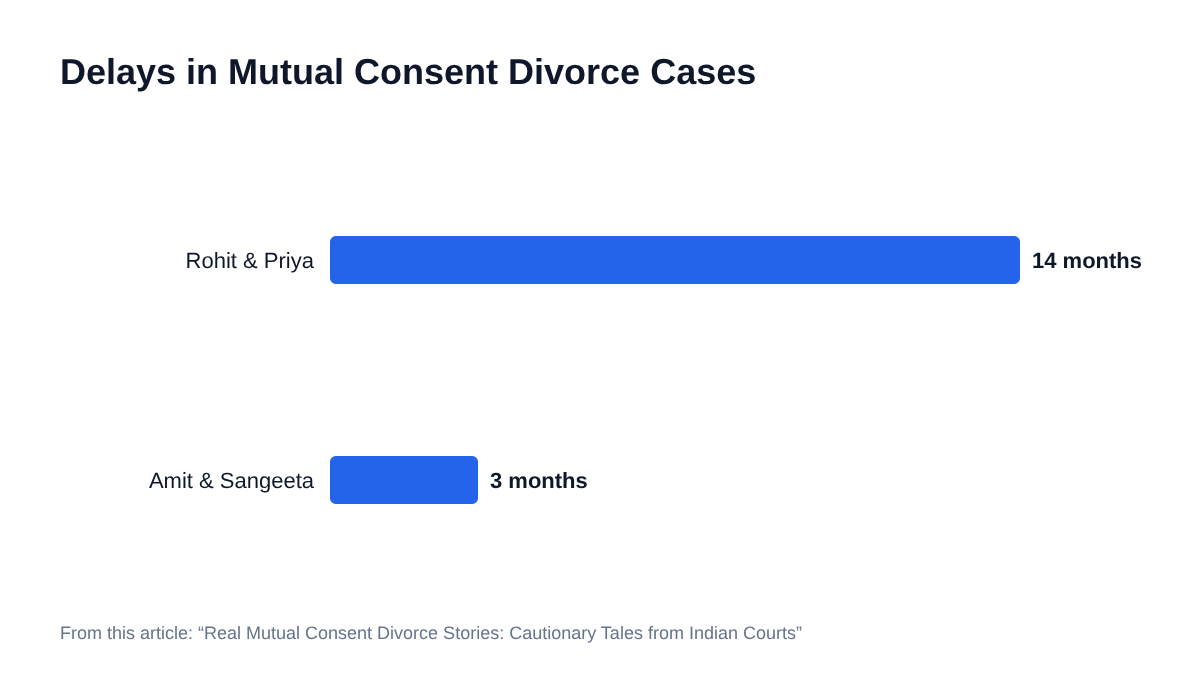
Rohit and Priya agreed on everything – no kids, no big assets, both ready to move on. They filed their joint petition in Delhi, expecting to finish in six months. But the court noticed Rohit’s address proof was outdated. It took three hearings and endless trips to government offices just to get a new one. By then, Priya had moved to another city, delaying the second motion further. Their divorce finally came through after 14 months.
Lesson: Even basic paperwork, like updated address proof, can cause major unexpected delays.
Story 2: Settlement Terms Not Detailed Enough
Sunil and Kavita filed in Chandigarh. Their joint petition just said “all matters settled by mutual agreement” – no details about alimony or property. The judge refused to grant the divorce, saying the terms were too vague. They had to rewrite their settlement, attach supporting documents, and file again, wasting several months.
Lesson: Courts want specific, written settlement terms covering money, assets, and custody. Vague language leads to rejection.
Story 3: Change of Heart During Cooling-Off Period
Meena and Aakash seemed united when they filed in Pune. But during the six-month waiting period, Aakash started reconsidering. He stopped picking up calls from the lawyer. On the second motion date, he didn’t show up. The court dismissed the petition. Meena now faces a much longer contested divorce process.
Lesson: Either spouse can withdraw consent until the very end, and there’s no legal way to force them back.
Story 4: Judge Suspects Coercion
In one Mumbai case, the judge noticed the wife looked nervous and kept glancing at her husband. After some questions, she admitted her family pressured her to agree. The judge rejected the petition and referred the couple to counseling.
Lesson: Judges are strict about ensuring both partners genuinely consent. Any hint of pressure can derail the process.
Story 5: Documentation Mix-Ups
Amit and Sangeeta filed in Gurgaon, but attached Sangeeta’s old PAN card with her maiden name. The court insisted on updated ID matching her married name. This led to a scramble for new documents and a three-month delay.
Lesson: All identification documents must match current legal names and marital status.
These mutual consent divorce stories show that small mistakes or unclear settlements can snowball into months of extra stress.
Where Mutual Consent Divorce Gets Stuck: Common Roadblocks and Case Study Insights
Even with both partners on the same page, the mutual consent divorce process in India often faces unexpected delays. These roadblocks can be legal, procedural, or emotional.
Legal Documentation Issues: The Most Frequent Culprit
Missing or mismatched documents are the top cause of delays. Courts are strict about:
– Marriage certificates (must be official, not just a wedding invitation)
– Affidavits (must include details of separation, settlement, and no coercion)
– Proof of address (matching both spouses’ current residence)
– Identity proof (names must match across all documents)
A single missing paper can mean a new hearing date and weeks lost. One client in Ludhiana had to wait 45 days just to get a corrected name on an Aadhaar card.
Court Rejection Reasons: How Judges Interpret the Law
Judges have wide discretion. Common court rejection reasons include:
– Settlement terms not clear or missing
– Suspicion of forced consent
– Lack of clarity on child custody
– Discrepancy in marital status or address
In some cities, courts require proof that the couple has lived separately for at least one year. If your rental agreement or utility bill doesn’t match, expect questions.
Emotional Hurdles: Changing Minds and Flaring Tempers
Even if everything is settled on paper, emotions run high. Couples sometimes fight over small things at the last minute. One partner might get cold feet or start new negotiations about money or children. The law allows either partner to back out before the second motion. This uncertainty makes the process unpredictable.
Unexpected Delays: From Strike Days to Lost Files
Some delays have nothing to do with the couple. Courts may close for strikes, judges get transferred, or files get misplaced. In one case, the judge went on leave for two months, leaving the couple in limbo. The family court system is overloaded, especially in big cities.
Case Studies: What Data Shows
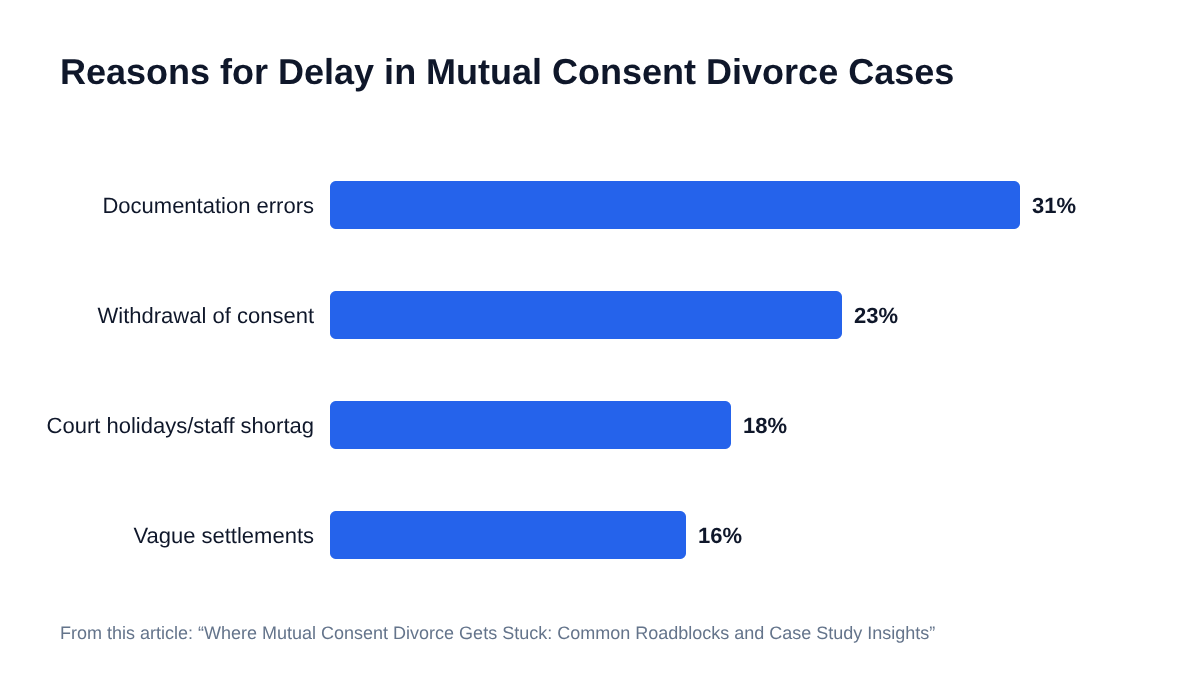
According to a 2022 survey by the Indian Bar Association, over 40% of mutual consent divorce cases face delays beyond the expected six-month period. Main reasons cited:
– Documentation errors: 31%
– Withdrawal of consent: 23%
– Court holidays and staff shortages: 18%
– Vague settlements: 16%
If you want a smoother process, double-check every document, and make sure both partners are truly committed.
For more on delays, see Divorce Timelines in India: Breaking Down the Real-World Roadblocks.
Legal Documentation Issues: What Courts Actually Check
Legal documentation issues account for most of the headaches in mutual consent divorce stories. Even small errors can result in a court rejection.

Key Documents Required
- Original marriage certificate (not just a photocopy)
- Address proof (Aadhaar, voter ID, or utility bill)
- Joint petition for divorce, properly signed and notarised
- Affidavits from both spouses (detailing separation, settlement, and no force)
- Passport-size photos
- Settlement agreement (detailed, covering alimony, child custody, property, etc.)
- Proof of separate residence (sometimes rent agreement or utility bills)
Common Mistakes
- Names not matching across all documents
- Old address proof
- Missing details in affidavits (like date of separation)
- Settlement agreements without signatures from both parties
- Failure to include all required annexures
How to Avoid Rejection for Documentation
- Make a checklist of all required documents for your local court.
- Cross-check names and addresses for consistency.
- Get all affidavits notarised and in the correct format.
- Attach supporting proof for all claims (like bank statements for alimony).
- Review your settlement agreement with a lawyer before filing.
Comparison Table: Required Documents vs. Common Errors
| Document | Must Have | Common Error |
|---|---|---|
| Marriage Certificate | Original, legible | Only photocopy given |
| Address Proof | Current address | Old address or mismatch |
| Affidavit | All details filled | Missing info or not notarised |
| Settlement Agreement | Specific, signed | Vague or unsigned |
| ID Proof | Matching names | Maiden name not updated |
If you want to avoid being sent back by the court, double-check every detail – don’t just rely on your lawyer.
Emotional Hurdles: Why Mutual Consent Isn’t Always Emotion-Free
Legal issues aside, emotional hurdles cause plenty of mutual consent divorce stories to go sideways. Even the most rational couples can stumble here.
Second Thoughts During the Waiting Period
The six-month cooling-off period is intended to give couples time to reconsider. Sometimes, old feelings come back. One partner might hope for reconciliation, or external family pressure makes them change their mind. If one partner withdraws consent, the whole process collapses.
Disagreements on Settlement Terms
Even after agreeing in principle, couples sometimes argue over small details – who keeps the car, who pays school fees, or whether alimony should be monthly or lump sum. These last-minute fights can derail the process.
Facing the Judge: Anxiety and Nerves
Appearing in court is stressful. Some people freeze or get emotional. Judges are trained to spot signs of coercion or uncertainty. If a partner seems unsure, the judge may order counseling or reject the petition.
Coping with the Emotional Toll
Divorce, even by mutual consent, is an emotional rollercoaster. Some tips that help:
– Attend counseling or therapy
– Prepare for court appearances with your lawyer
– Set clear boundaries on communication during the process
– Have a support system (friends or family)
Remember, emotional setbacks can be just as damaging as legal mistakes.
Court Rejection Reasons: What Judges Look For Before Saying Yes
Even after months of paperwork and waiting, courts can and do reject mutual consent divorce petitions. Understanding the main court rejection reasons can save you a world of trouble.
Lack of Genuine Consent
Judges look for real, voluntary agreement. If either spouse appears unsure or pressured, the judge will ask tough questions. Any hint of coercion leads to counseling or outright rejection.
Incomplete or Vague Settlement Terms
Courts insist on clear, written agreements covering:
– Alimony (amount, payment schedule)
– Child custody (living arrangements, visitation)
– Property division (who gets what, with proof)
If these are missing or too vague, the court will not grant the divorce.
Inconsistent or Missing Documentation
Judges scrutinise every document. Mismatched names, missing proofs, or unsigned affidavits are grounds for rejection. Each court may have extra local requirements.
Suspected Fraud or Collusion
If the judge suspects the couple is faking separation for illegal reasons (like property transfer or immigration), the petition may be dismissed.
Not Meeting Legal Criteria
Some courts want proof that the couple has lived separately for at least a year. If your documents don’t match, expect a rejection.
Pro Tip: Always check with your local family court for specific requirements before filing.
Unexpected Delays: Why the Six-Month Promise Rarely Holds True
Most mutual consent divorce stories start with hope for a quick end. Lawyers often promise “six months, no problem.” But real-world delays are common, and they come from all directions.
Court Backlogs and Staff Shortages
Indian family courts are overloaded. Some cities have a case backlog stretching over years. Even if your paperwork is perfect, you might wait weeks for a hearing date.
Judge Transfers and Holidays
Judges get transferred mid-case, or go on leave without notice. Your file might sit untouched while you wait for the new judge to settle in. Court holidays, strikes, and festivals add more delays.
Lost Files and Administrative Errors
Files sometimes go missing in the court registry. I’ve seen clients spend weeks tracking down a misplaced petition. Even a spelling mistake in the court’s records can mean another round of affidavits and hearings.
Withdrawal of Consent
A partner can withdraw consent at any time before the final decree. This is the single biggest risk to a quick mutual consent divorce. If it happens, you may have to start a contested divorce, which can take years.
For more on why the “three-month divorce” is a myth, see Why Most Three-Month Divorce Promises Fall Apart in Practice.
How to Minimise Delays
- Double-check all paperwork before filing
- Attend every court date without fail
- Keep communication open with your lawyer
- Get all agreements in writing
- Check court schedules and holidays
How to Prepare for Mutual Consent Divorce: Best Practices and Practical Tips
If you want your mutual consent divorce to be as smooth as possible, you need a solid plan. Here are the best practices, straight from real mutual consent divorce stories and case studies divorce lawyers share.
Step-by-Step Preparation Checklist
- Settle All Issues First: Agree on child custody, alimony, and property before filing.
- Gather All Documents: Marriage certificate, address proof, ID, settlement agreements, etc.
- Draft a Detailed Settlement: Cover every aspect – money, kids, property – with supporting documents.
- File Joint Petition: Both spouses must sign and appear in court.
- Prepare for Emotional Hurdles: Consider counseling or mediation if needed.
- Attend Both Motions: Be present and consistent in your statements.
- Keep Copies of Everything: Files sometimes get lost.
Legal Tips from Experienced Lawyers
- Always check your local court’s unique requirements.
- Don’t rely only on your lawyer – review every document yourself.
- Get affidavits notarised and in the proper format.
- Be honest in court. Judges can spot rehearsed or false statements.
- Prepare answers for likely questions about settlement and consent.
Emotional Best Practices
- Take time to process your feelings before filing.
- Don’t rush into mutual consent if you’re unsure.
- Set boundaries for communication with your spouse during the process.
Use Legal Loopholes Wisely
Some legal loopholes can shorten the waiting period, but courts rarely grant them except for urgent medical or foreign travel reasons. For more, see Legal Loopholes That Could Cut Down Your Divorce Waiting Period.
Frequently Asked Questions
What is mutual consent divorce in India?
Mutual consent divorce is a legal process where both spouses agree to end their marriage amicably, file a joint petition, and settle issues like alimony and child custody before the court. The process usually involves two court appearances and a six-month waiting period.
How long does mutual consent divorce take?
The minimum period is six months after filing the first motion, but most cases take 8 – 14 months due to documentation issues, court delays, or emotional setbacks. Some courts may waive the waiting period in rare circumstances.
Can one spouse withdraw consent after filing?
Yes, either spouse can withdraw consent at any time before the final decree is granted. If this happens, the mutual consent process ends and a contested divorce may be necessary.
What documents are required for mutual consent divorce?
Key documents include the marriage certificate, address proof, ID proof, joint petition, affidavits, passport-size photos, and a detailed settlement agreement. Some courts also require proof of separate residence or utility bills.
What are common court rejection reasons for mutual consent divorce?
Courts may reject petitions due to vague settlement terms, missing documents, suspicion of coercion, inconsistent statements, or lack of proof of separate residence. Judges look for genuine consent and clear agreements.
How can I avoid unexpected delays in mutual consent divorce?
Double-check all required documents, ensure settlement terms are detailed, attend every court date, communicate with your lawyer, and prepare for possible emotional hurdles. Having everything in order helps reduce delays.
What if my spouse does not show up for the second motion?
If one spouse fails to appear for the second motion, the court will usually dismiss the petition. The mutual consent process cannot proceed unless both parties are present and willing.
Is mutual consent divorce possible without a lawyer?
Legally, you can file without a lawyer, but it is risky due to complex paperwork, local court rules, and the need for proper affidavits. Most couples use a lawyer to avoid mistakes and reduce delays.
Can the six-month waiting period be waived?
In rare cases, courts may waive the six-month period if there is evidence of hardship, urgent medical need, or overseas relocation. Each court applies its own standards, and waivers are not guaranteed.
What happens if documents have different names or addresses?
Courts usually require all documents to have matching names and current addresses. If there are mismatches, you may need to update your documents before proceeding or risk rejection.
How do emotional hurdles affect the mutual consent process?
Emotional hurdles like second thoughts, family pressure, or last-minute disputes can lead to withdrawal of consent or inconsistent statements, causing delays or outright failure of the process.
What is the difference between mutual consent and contested divorce?
Mutual consent divorce requires agreement from both spouses on all issues and is faster, while contested divorce is filed by one spouse against the other and can take several years due to court battles and hearings.
Are mutual consent divorce stories common?
Yes, mutual consent divorce stories are increasingly common in India, especially in urban areas. They highlight the real challenges couples face, from paperwork to emotional breakdowns.
What are case studies divorce lawyers share about mutual consent?
Lawyers often share case studies about delays due to missing documents, vague settlements, or last-minute withdrawal of consent. These stories help new clients avoid repeating the same mistakes.
What can I do if my mutual consent divorce is rejected?
If your petition is rejected, you can correct the errors, gather missing documents, or rewrite the settlement and file again. If consent is withdrawn by one spouse, you may have to file for contested divorce.
Key Takeaways from Real Mutual Consent Divorce Stories
- Legal documentation issues are the top cause of delays in mutual consent divorce.
- Courts demand clear, detailed settlement agreements covering money, property, and custody.
- Either spouse can withdraw consent at any stage before the final decree.
- Judges are strict about signs of coercion or vague settlements.
- Emotional hurdles, like last-minute doubts, can derail even an amicable divorce.
- Court backlogs, judge transfers, and lost files add to unexpected delays.
- Most mutual consent divorces take longer than the promised six months.
- Double-checking documents and being present at all hearings helps avoid common pitfalls.
- Counseling and clear communication between spouses can ease emotional stress.
- Local court requirements may differ, so always check before filing.
Most couples expect mutual consent divorce to be quick, but real mutual consent divorce stories show it’s often a rocky road. Small documentation errors or emotional setbacks can snowball into months of extra waiting. Courts want clarity, honesty, and complete paperwork before they say yes.
If you’re considering this path, prepare carefully, keep your expectations realistic, and learn from others’ experiences. It’s the best way to avoid regret and get the closure you actually want.
