


Child Custody Battles in Chandigarh: What Most Parents Overlook
It starts with a sleepless night and a phone call you wish you never had to make. In Chandigarh, child custody battles show up in ordinary homes, not just courtrooms. The questions eat at you: Will I lose my child? Will the judge see the truth? Parents often think they know what matters, but the law and reality rarely match their expectations.
Child custody in Chandigarh isn’t just about paperwork or who earns more. It’s about small details: where your child feels safe, which parent knows her school friends’ names, who remembers her allergies. Most parents overlook these things, focusing only on legal rights or bitter accusations. That’s a mistake, and it can cost you dearly.
If you’re caught in the storm of a custody dispute, you’re not alone. Chandigarh courts see hundreds of cases every year, but few parents walk in prepared for what truly matters. The law tries to protect children, but it’s a maze. My goal is to help you see around the corners, so you don’t miss what matters most.
The single biggest thing parents overlook in child custody Chandigarh cases is that courts focus on the child’s best interests, not just parents’ wishes or accusations. Evidence of daily care, emotional bonds, and stability often outweigh legal arguments or financial status.
What Really Decides Child Custody in Chandigarh?
Custody decisions in Chandigarh hinge on more than just legal paperwork or bitter arguments. Family courts look at the whole picture – who the child knows best, where she feels secure, and who’s been there for her day after day. Judges don’t just listen to who shouts loudest or earns the most.
The main legal framework is the Guardians and Wards Act, 1890, along with the Hindu Minority and Guardianship Act, 1956 (for Hindus). But courts in Chandigarh, like elsewhere in India, are guided by a simple but powerful principle: the welfare of the child comes first.
What Does ‘Best Interests of the Child’ Mean?
- The child’s emotional attachment to each parent
- Stability of the home environment
- The child’s age, health, and specific needs
- How involved each parent has been in daily life (school, health, friends)
- The child’s own wishes, especially if over 9 – 10 years old
It’s not about who has a bigger house or a higher salary. Judges in Chandigarh want to see real involvement and genuine care.
Types of Custody in Chandigarh
- Physical Custody: The child lives with one parent; the other gets visitation
- Joint Custody: Both parents share time and responsibilities, often alternating weeks or days
- Legal Custody: The right to make decisions about education, health, and religion (can be joint or sole)
- Guardianship: Appointed if both parents are unfit or unavailable
Common Misconceptions About Custody Decisions
- The mother always gets custody (not true after age 5 – 7)
- Fathers never win (wrong – courts look at actual care, not gender)
- High income guarantees custody (false – money matters less than daily parenting)
- Character assassination works (rarely; judges see through personal attacks)
Custody isn’t about punishing your ex. It’s about showing the court your child’s life will be better, safer, and happier with you.
Parental Rights Law and Gender Myths: What the Law Actually Says
Many parents come in expecting the law to favour their gender or their version of events. Honestly, the law is more balanced (and more complicated) than most people realise.
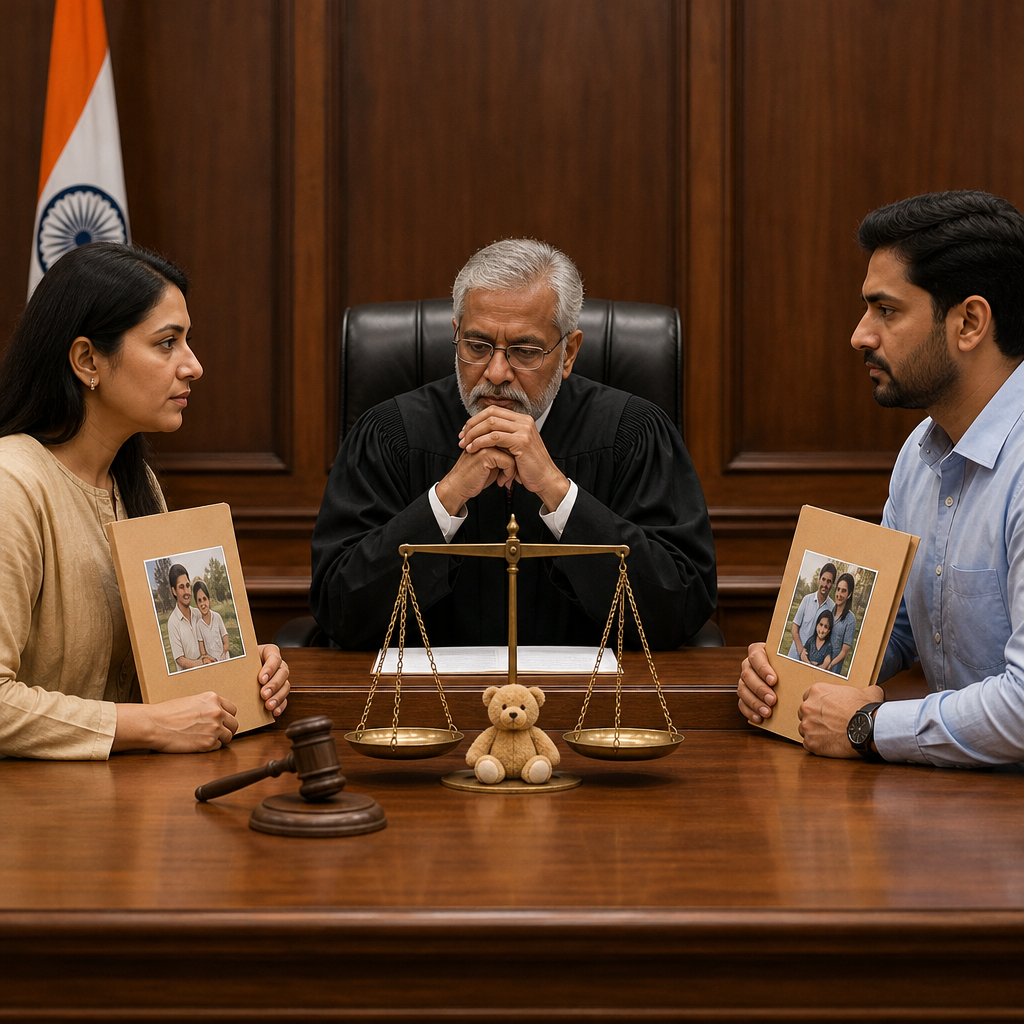
Under Indian law, both mothers and fathers have equal legal standing to seek custody. The court’s only priority is the child’s welfare, not the parent’s gender or status.
Mother’s Custody Rights in Chandigarh
Traditionally, mothers have been preferred for young children (usually under age 5 – 7). The logic is that kids need maternal care in early childhood. But once a child grows older, especially if they can express a preference, the court weighs both parents equally.
- Primary care: If a mother can show she’s been the main caregiver, this counts strongly in her favour.
- Work schedule: Courts do look at practicalities – if the mother’s job keeps her away long hours, it can affect her case.
- Remarriage: Not an automatic disqualifier, but courts will check if the new environment is stable.
Father’s Custody Rights in Chandigarh
Fathers often assume they have no chance, but that’s a myth. If a father has been actively involved – school runs, doctor visits, daily routines – the court will listen.
- Active parenting: Judges want proof of real involvement, not just financial support.
- Stable home: If the father can provide a safe, nurturing environment, this helps.
- Mother’s fitness: If there are genuine concerns about the mother’s well-being or home situation, the court considers them.
Joint Custody Legalities: When Both Parents Share
In recent years, Chandigarh courts have started granting joint custody more often, especially when both parents are fit and willing. This means the child spends substantial time with each parent, and both take part in decisions.
- Schedules: Joint custody may mean alternate weeks, weekends, or split holidays.
- Decision-making: Both parents must agree on schooling, health, and travel.
- Flexibility required: Courts expect parents to cooperate for the child’s sake.
What the Law Ignores
- Who paid for the wedding
- Who owns the house
- Family pressure or status
- Purely financial arguments (without proof of involvement)
The law focuses squarely on the child’s welfare. Anything else is just noise.
Family Court Procedure in Chandigarh: Step-by-Step Breakdown
Walking into family court for a child custody battle in Chandigarh can feel like stepping into a different world. The process is formal, sometimes slow, and always stressful. Knowing the steps can help you prepare.
The family court procedure for child custody Chandigarh cases follows set stages: filing, mediation, evidence, and final hearing. Each step demands specific documents, timelines, and personal appearances.
Step 1: Filing the Petition
- Draft and file a custody petition in the Family Court of Chandigarh.
- Include details of your relationship, the child’s age, living arrangements, and reasons for seeking custody.
- Attach supporting documents: birth certificate, school records, medical history, and proof of parental involvement.
Step 2: Notice and Response
- The court serves notice to the other parent.
- The respondent files a written reply, often with counter-allegations or alternative proposals.
Step 3: Mediation Attempt
- Chandigarh courts require mediation before a full trial.
- A neutral mediator tries to help parents reach a settlement.
- If successful, the agreement is recorded. If not, the case moves forward.
Step 4: Evidence and Interim Orders
- Both parents present evidence: photos, school records, witness statements, and sometimes psychologist reports.
- The court may grant interim custody or visitation while the case proceeds.
Step 5: Child Interview and Welfare Assessment
- Judges often meet the child privately, especially if she’s over 9.
- Social workers or child welfare officers may visit each home and report on living conditions.
Step 6: Final Hearing and Judgment
- Both sides argue their case, often with lawyers.
- The judge issues a detailed order, setting out custody, visitation, and conditions.
Documents and Evidence Courts Value Most
- School attendance and report cards
- Medical records (showing who handled care)
- Photos of family events, birthdays, daily routines
- WhatsApp chats or emails showing involvement
- Third-party witness statements (teachers, neighbours)
Honestly, most parents underestimate how much real-life evidence matters. Courts want to see proof, not just promises.
Guardian Appointment and Alternative Arrangements
Sometimes, neither parent is fit for custody. This is rare, but it happens – maybe due to addiction, mental illness, or absence. In such cases, the court can appoint a guardian under the Guardians and Wards Act.
A guardian appointment in Chandigarh family courts is a formal legal process. The court selects a responsible adult (often a grandparent or close relative) to care for the child if both parents are unavailable or unfit.
Criteria for Guardian Appointment
- The child’s own preference (if old enough)
- Emotional bond with the proposed guardian
- The guardian’s ability to provide a stable, loving home
- Absence of conflict of interest
Temporary vs Permanent Guardianship
- Temporary (interim) guardianship: Granted during court proceedings or emergencies
- Permanent guardianship: Ordered when both parents are permanently unfit or deceased
Guardianship vs Custody: Key Differences
| Feature | Custody | Guardianship |
|---|---|---|
| Who can get it? | Usually parents | Relatives, others |
| Duration | Until child is 18 or order is changed | Can be temporary or permanent |
| Focus | Daily care, upbringing | Legal responsibility, property, welfare |
Practical Scenarios
- Both parents living abroad, child with grandparents in Chandigarh
- Parent in jail or rehab, child’s uncle appointed guardian
- Parents deceased, court appoints maternal grandmother
Courts in Chandigarh rarely use guardianship unless there’s no safe parental option.
Child Welfare Legal Standards: What Judges Look For
Every custody battle in Chandigarh comes back to a single legal standard: the welfare and best interests of the child. But what does this mean in practice? It’s not a checklist – judges look at the whole story.
Child welfare legal standards in Chandigarh include emotional health, physical safety, educational opportunities, and continuity of care. Judges want to see stable routines, safe environments, and loving relationships.
Key Welfare Factors
- Emotional Security: Does the child feel safe and loved?
- Routine and Stability: Can the parent provide regular meals, school attendance, and discipline?
- Physical Health: Are medical needs met? Is the home clean and safe?
- Social Support: Extended family, friends, and community ties
- Educational Continuity: Will the child’s schooling be disrupted?
How Judges Assess Welfare
- Private interviews with the child (especially over 9 – 10 years old)
- Reports from social workers or child welfare officers
- School feedback (teachers’ input on behaviour, attendance)
- Home visits (sometimes unannounced)
Mistakes Parents Make
- Badmouthing the other parent in front of the child
- Ignoring the child’s own wishes
- Disrupting schooling or routines
- Focusing only on accusations, not solutions
Judges want to see parents who put their child’s happiness above their own anger. That’s the honest truth.
Joint Custody in Chandigarh: How It Works Day-to-Day
Joint custody is no longer rare in Chandigarh. Courts increasingly see the value of both parents playing active roles. But joint custody isn’t just a legal phrase – it’s a real-life juggling act.

Joint custody in Chandigarh means both parents share time, responsibilities, and decision-making for the child. Schedules, communication, and flexibility matter more than legal paperwork.
Common Joint Custody Arrangements
- Alternate weeks (child spends one week with each parent)
- Split weekdays and weekends (e.g., weekdays with mother, weekends with father)
- Shared holidays and festivals
- Joint decisions on schooling, health, and travel
Practical Challenges
- Coordinating school pickups, tuition, and doctor visits
- Managing communication (WhatsApp groups, shared calendars)
- Handling new partners or remarriage
- Flexibility for emergencies (illness, travel)
Tips for Making Joint Custody Work
- Keep communication respectful and focused on the child
- Stick to agreed routines as much as possible
- Involve both parents in school meetings, doctor visits, birthdays
- Use written schedules so everyone knows what to expect
Joint custody needs maturity and a willingness to put the child first, even when it’s hard.
Mistakes Most Parents Make in Chandigarh Custody Battles
Every parent thinks they know what will win their case. Honestly, most get blindsided by the same avoidable errors. Chandigarh courts see these mistakes far too often.
The most common mistakes in child custody Chandigarh cases are ignoring the child’s wishes, focusing on attacking the other parent, and failing to show real evidence of involvement.
Top Mistakes to Avoid
- Assuming gender guarantees custody (it doesn’t)
- Refusing mediation or settlement offers
- Bringing children to court as a weapon
- Hiding income or assets (courts find out)
- Ignoring school or medical needs
- Failing to document daily involvement
What Courts Want Instead
- Respect for the child’s emotional needs
- Willingness to cooperate and communicate
- Detailed evidence of hands-on parenting
- Solutions, not just complaints
Real Chandigarh Cases
- A father lost custody after WhatsApp chats revealed he rarely visited his child, despite high income.
- A mother won joint custody when she showed a calendar of every school event she attended over two years.
- Both parents lost primary custody after violent fights in front of the child – grandmother was appointed guardian.
If you remember nothing else, remember this: courts care about your child’s day-to-day life, not just your anger or pride.
Best Practices for Parents Facing Custody Hearings
Winning a custody case isn’t about beating your ex. It’s about showing the court you’re the best choice for your child’s happiness and growth. Here’s what works in Chandigarh courts.
To improve your chances in child custody Chandigarh cases, focus on your child’s needs, gather solid evidence, and maintain respectful communication with the other parent.
Practical Steps Before Court
- Keep a daily journal of your involvement (school, meals, homework, doctor visits)
- Save messages, emails, and school reports showing your role
- Avoid negative talk about your ex in front of your child
- Prepare a realistic schedule for custody and visitation
- Attend all school and medical appointments
During the Hearing
- Stay calm and respectful (judges notice)
- Answer questions clearly and honestly
- Be flexible about visitation and holidays
- Highlight your child’s needs, not your complaints
After the Order
- Stick to the schedule set by the court
- Communicate through agreed channels (messages, email)
- Report any genuine problems (illness, emergencies) immediately
If you need more legal help, consider reading Chandigarh Divorce Lawyers Who Shift the Balance in Matrimonial Disputes for an overview of experienced advocates in the city.
Recent Trends and Future Outlook in Chandigarh Custody Law
Custody law in Chandigarh isn’t stuck in the past. Judges, lawyers, and social workers are slowly shifting to more child-focused, flexible solutions. Joint custody is rising, and courts are less interested in old stereotypes.
Recent trends in child custody Chandigarh cases include more joint custody orders, greater weight to the child’s preferences, and the use of technology for communication and evidence.
Key Trends
- More joint custody orders, especially for children over 7 – 8
- Child’s wishes given more weight in court decisions
- Use of video calls, WhatsApp, and shared calendars for co-parenting
- Faster mediation processes to reduce trauma
What’s Changing
- Less bias in favour of mothers or fathers – focus is on real involvement
- Mental health and emotional stability now get more attention
- Courts are open to creative solutions (split school years, supervised visitation)
What to Watch For
- New guidelines on joint custody from the Supreme Court
- Possible mediation centres attached to family courts
- Growing role of psychologists and child welfare experts
If your case is high-conflict or complex, see When a High-Conflict Divorce Demands More Than Standard Legal Advice for tips on handling tough disputes.
Frequently Asked Questions
What is the process for child custody cases in Chandigarh?
Child custody cases in Chandigarh start with filing a petition in the Family Court. This is followed by a notice to the other parent, mandatory mediation, evidence presentation, and finally, a hearing where the judge decides custody based on the child’s best interests.
How do Chandigarh courts decide between mother’s and father’s custody rights?
Chandigarh courts consider who has been the primary caregiver, the child’s wishes (especially if over 9), stability of home, and both parents’ involvement. Gender alone does not determine custody rights.
Can joint custody be granted in Chandigarh?
Yes, joint custody is increasingly common in Chandigarh, especially when both parents are fit and willing. The court sets a schedule for shared time and requires both parents to cooperate in decision-making.
What documents help my child custody case in Chandigarh?
Useful documents include the child’s birth certificate, school and medical records, proof of daily involvement (photos, messages), and witness statements from teachers or neighbours. Having detailed evidence strengthens your case.
How long does a child custody case take in Chandigarh?
Most cases take 6 – 18 months, depending on complexity, court schedules, and whether mediation succeeds. Disputes or appeals can extend the process.
What does ‘child welfare’ mean in Chandigarh custody law?
Child welfare refers to the overall well-being of the child, including emotional security, physical safety, stable routines, and continued education. Judges base decisions on what benefits the child most.
Who can be appointed as a guardian in Chandigarh?
If both parents are unfit or unavailable, the court may appoint a close relative (such as a grandparent, uncle, or aunt) as guardian under the Guardians and Wards Act. The child’s preference and emotional bond are considered.
Do children get to choose which parent to live with?
If the child is mature enough (usually over 9 – 10 years), the court may interview her privately to understand her preference. The child’s wishes are important but not the only factor.
What happens if parents violate a custody order?
Violating a custody order can lead to contempt of court, fines, or even jail in extreme cases. The other parent can apply for enforcement or modification of the order.
How does mediation work in Chandigarh custody cases?
Mediation is a mandatory step where a neutral mediator helps parents try to reach an agreement. If successful, the settlement is recorded by the court. If not, the case moves to trial.
Can custody be changed later?
Yes, either parent can apply to modify custody if circumstances change (for example, relocation, remarriage, or concerns about the child’s welfare). The court will review evidence and decide if a change is in the child’s best interest.
Is joint custody better than sole custody?
Joint custody can benefit the child by allowing strong relationships with both parents, but it requires cooperation and clear communication. Sole custody may be better if one parent is unfit or absent.
How does Chandigarh law treat custody for children with special needs?
Courts pay extra attention to medical and educational needs. The parent best able to provide consistent care, therapy, and support is usually favoured.
What are common mistakes parents make in Chandigarh custody battles?
Common mistakes include ignoring the child’s wishes, focusing on blaming the other parent, and failing to show daily involvement. Courts want evidence of real parenting, not just accusations.
What’s the difference between custody and guardianship in Chandigarh?
Custody usually refers to daily care and upbringing by a parent. Guardianship is a legal responsibility granted to a non-parent (like a grandparent) when parents are unavailable or unfit.
Key Takeaways
- Chandigarh courts always put the child’s welfare first, not parents’ wishes.
- Both mothers and fathers have equal legal rights to seek custody.
- Joint custody is increasingly common, but it needs cooperation.
- Evidence of daily care matters more than income or property.
- Mediation is required before a full custody trial.
- Judges consider the child’s wishes if she is old enough.
- Guardianship is rare and only used if both parents are unfit or unavailable.
- Mistakes like badmouthing the other parent or ignoring the child’s needs can hurt your case.
- Real-life involvement and stability make the strongest case.
- Legal advice and documentation are critical for success in court.
Child custody disputes in Chandigarh are never simple. The law tries to protect children from the fallout of angry parents, but the system isn’t perfect. What matters most is showing the court that your child’s safety, happiness, and growth come before your own anger or pride.
If you’re preparing for a custody case, focus on your child’s routines, feelings, and daily life. Judges see through drama and accusations, but they do respond to real evidence and honest parenting. That’s the best way to protect your child – and yourself – in a tough situation.
