
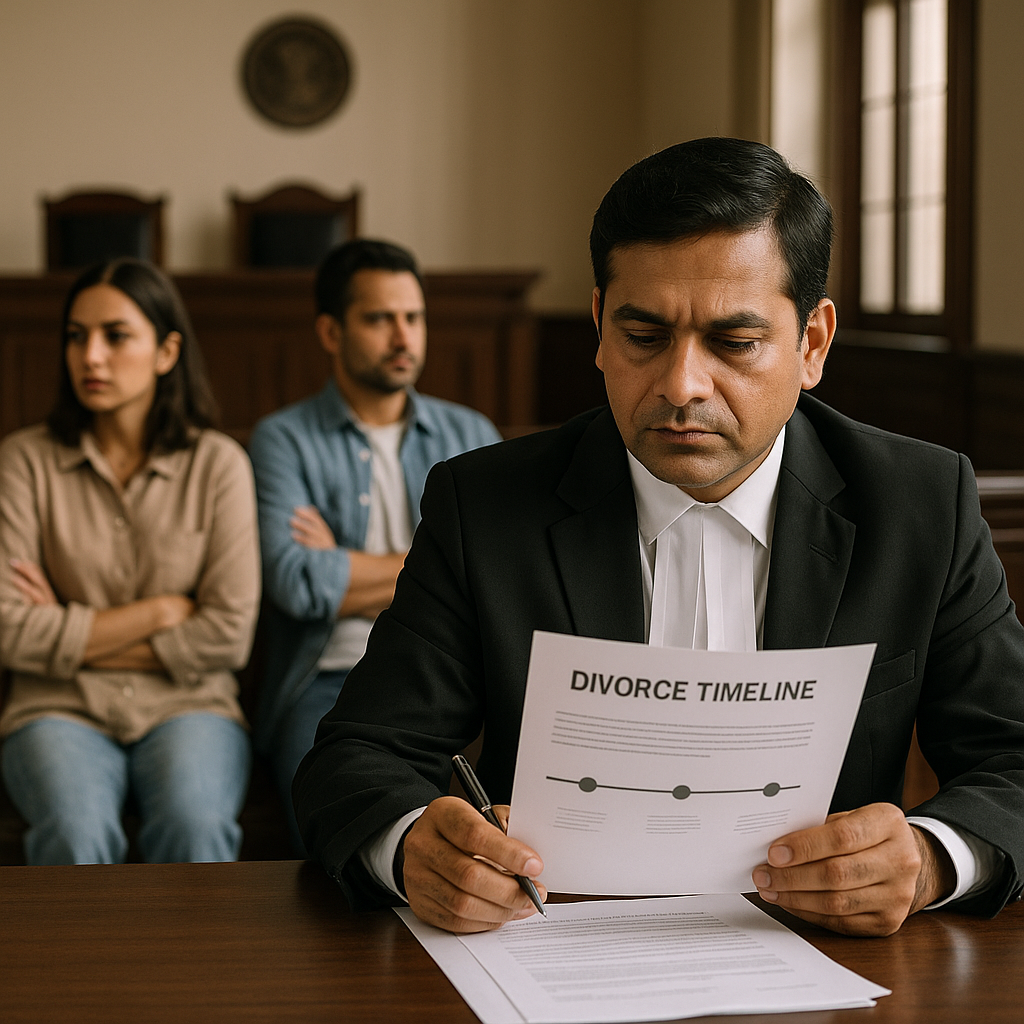
Realistic Timelines: How Long Does Divorce Take in Chandigarh?
Facing Divorce in Chandigarh: What Real People Want to Know
Divorce is never just paperwork. For most couples in Chandigarh, it means months of waiting, repeated court visits, and a lot of not-knowing. If you’ve ever asked a divorce lawyer how long it might take, you’ve probably heard, “It depends.” That’s true, but it’s not very helpful when you’re staring at an empty home or fielding questions from family. You want the real divorce process timeline in Chandigarh – the good, the bad, and the delays.
Why does this matter so much? Because time drags when you’re stuck in limbo. Money, children, property, and your peace of mind are on the line. The process can feel confusing, with different answers from friends, advocates, and random websites. Chandigarh courts follow the law, but the pace isn’t always predictable. Knowing what to expect helps you plan, fight less, and sometimes even sleep better.
This guide is for anyone in Chandigarh starting, considering, or stuck in a divorce. It covers mutual consent and contested divorce timelines, what actually happens in court, common mistakes, and the reality behind the numbers. The aim is simple: give you the clearest, most realistic picture of how long divorce takes in Chandigarh – without the usual legal fog.
Quick Answer: How Long Does Divorce Take in Chandigarh?
Quick Answer:
A mutual consent divorce in Chandigarh usually takes 6 to 9 months from the first petition to the final decree, assuming no major delays. Contested divorces can take 2 to 5 years (sometimes longer) due to multiple court hearings, evidence, and appeals. Timelines depend on cooperation, court workload, and case complexity.
Understanding the Divorce Process Timeline in Chandigarh
The divorce process timeline in Chandigarh depends on the type of divorce, the cooperation between parties, and the schedule of Chandigarh courts. Knowing the typical steps helps set expectations – and avoid common surprises.
Types of Divorce: Mutual Consent vs Contested
- Mutual Consent Divorce: Both spouses agree to separate. This is the fastest route.
- Contested Divorce: One spouse disagrees or refuses consent. This takes much longer.
Basic Process Steps
Most divorces in Chandigarh follow this general path:
- Filing the Petition: You (or your divorce lawyer) submit the application in family court.
- First Hearing: The court reviews paperwork, checks for errors, and may ask questions.
- Cooling-Off Period: For mutual consent, there’s a mandatory gap (usually 6 months) to allow for possible reconciliation.
- Evidence and Arguments: In contested cases, both sides present evidence, witnesses, and arguments. This stage can drag for months.
- Cross-Examination: The court hears both sides, sometimes with multiple dates for witnesses.
- Final Arguments and Order: The judge issues a decree after all evidence is heard.
- Appeals (if any): Either side can appeal, adding several more months or years.
How Chandigarh Courts Influence Timelines
- Court Schedules: Family courts in Chandigarh are busy, with limited judges.
- Adjournments: Delays may happen if one side is absent or requests more time.
- Holidays and Strike Days: Court holidays and lawyer strikes can add weeks of waiting.
- Paperwork Errors: Missing or incorrect documents mean fresh dates.
Typical Timeline Table
| Type of Divorce | Minimum Duration | Average Duration | Maximum Duration |
|---|---|---|---|
| Mutual Consent Divorce | 6 months | 6 – 9 months | 1 year |
| Contested Divorce | 2 years | 2 – 5 years | 7+ years |
Honest tip: Even a mutual consent divorce can take longer if paperwork isn’t perfect or both sides don’t appear on time. For contested cases, expect at least 2 years unless you’re incredibly lucky.
Mutual Consent Divorce: Fastest Route, But Not Always Simple
A mutual consent divorce is, in theory, the shortest path out. Both spouses sign a joint petition, saying they’ve lived apart for at least one year and want to end the marriage. Chandigarh courts tend to process these faster, but there are still steps and waiting periods.
Steps in a Mutual Consent Divorce
- Drafting and Filing the Joint Petition: Both parties, through their divorce advocate, file a petition in Chandigarh’s family court.
- First Motion Hearing: The court records statements and tries to confirm both sides agree.
- Cooling-Off Period: Legally, there’s a minimum 6-month wait (can be waived in rare, urgent cases, but Chandigarh courts rarely do this).
- Second Motion Hearing: After the gap, both appear again. The court confirms consent is still there.
- Final Decree: If all’s in order, the judge grants the divorce.
Average Timeline in Chandigarh
- Minimum duration: 6 months (if everything is perfect)
- Average duration: 7 – 9 months (including delays, rescheduling, and paperwork)
- Maximum duration: 1 year or more (if parties miss dates or there’s confusion about alimony/child custody)
Factors That Can Delay Even a Mutual Divorce
- Disagreements over property, children, or money (even after filing)
- One party not showing up for a hearing
- Incomplete or incorrect documents
- Court holidays or strikes
- Judges’ workload in Chandigarh courts
Practical Tips for a Faster Mutual Divorce
- Prepare all documents (marriage certificate, address proof, ID, agreements on money/children)
- Agree on alimony and custody before filing
- Show up for every hearing – missing one can push your date by weeks
- Use a competent divorce lawyer familiar with Chandigarh family law
Most people overthink the cooling-off period. Unless there’s a real emergency, courts in Chandigarh rarely waive it.
Contested Divorce: Why It Takes So Much Longer
Contested divorces in Chandigarh are a marathon, not a sprint. If even one major issue is disputed – adultery, cruelty, property, children – the court must hear both sides in detail. That means more hearings, more paperwork, and more waiting.
Steps in a Contested Divorce
- Filing the Petition: One spouse files a case citing legal grounds (cruelty, desertion, etc.).
- Notice to the Other Party: Court serves notice; the other side gets time to reply.
- Written Statement: The respondent files their version.
- Framing of Issues: Court lists the points to be decided.
- Evidence by Petitioner: Documents, witnesses, and cross-examination.
- Evidence by Respondent: Same process for the other side.
- Final Arguments: Both sides summarize their case.
- Judgment: The court issues a verdict.
- Appeals: Either side may challenge the verdict.
Realistic Timeline in Chandigarh
- Minimum: 2 years (if there are few disputes and everyone cooperates)
- Average: 3 – 5 years (most cases)
- Maximum: 7+ years (if appeals or repeated adjournments occur)
Why Does It Take So Long?
- Multiple court hearings, often months apart due to crowded dockets
- Need for evidence, which means calling witnesses who may not show up
- Cross-examination takes time, especially if lawyers are thorough
- Delays for missing documents, absences, or new claims
- Appeals to higher courts (Punjab & Haryana High Court)
Common Issues That Drag Out Contested Divorces
- Disputes over child custody or visitation
- Alimony and maintenance disagreements
- Property division, especially inherited or joint assets
- Allegations of cruelty, desertion, or adultery (require evidence)
Chandigarh-Specific Challenges
- Family courts here handle hundreds of cases each month
- Judges often rotate, so a new judge may need time to review old files
- Legal process can be slowed by festivals, government holidays, or even weather (flooding can shut down courts)
If your case is contested, be prepared for the long haul. Bring snacks to court – seriously.
Key Factors That Affect the Divorce Timeline in Chandigarh
Not every divorce moves at the same speed. Chandigarh’s legal process has its own quirks, and small decisions early on can mean big delays (or faster closure) later.
Factors You Can Control
- Level of Cooperation: The more you and your spouse agree, the faster things move.
- Choice of Divorce Lawyer: An experienced divorce advocate in Chandigarh knows which documents matter and how to avoid silly errors.
- Preparation: Get all supporting documents ready before the first hearing.
- Attendance: Missing court hearings means automatic delays.
Factors You Cannot Control
- Court Workload: If Chandigarh courts are overloaded, your case gets pushed back.
- Holidays and Strikes: These can add weeks or months, especially during festival seasons.
- Judge Transfers: A new judge may take time to review your file.
- Other Party’s Tactics: Sometimes, a spouse may intentionally delay proceedings by not attending or filing repeated applications.
Real-World Example
Suppose you file for mutual consent divorce in January. You get a hearing in February, and both appear. The next hearing is set for August (6 months later). But if one party is traveling or the judge is on leave, it may get pushed to September or October. Now, if you miss a paper or a signature, you might add another month. That’s how 6 months often becomes 9 months.
Mistakes That Slow Down the Process
- Not agreeing on alimony or custody before filing
- Submitting incomplete forms or missing documents
- Not responding to court notices in time
- Changing lawyers mid-way (sometimes unavoidable, but slows things)
The biggest mistake? Assuming the timeline is fixed. It isn’t. Small things add up.
Role of Divorce Lawyers and Advocates in Chandigarh
A good divorce lawyer can mean the difference between a quick process and years of frustration. But even the best advocate can’t override court schedules or the law.
What a Divorce Lawyer Actually Does
- Drafts and files your petition, ensuring all documents are in order
- Represents you at court hearings, argues your case, and cross-examines witnesses
- Advises on legal strategy (mutual consent vs contested, evidence needed, etc.)
- Negotiates settlements on alimony, custody, and property
- Files appeals if needed
How to Choose the Right Divorce Advocate in Chandigarh
- Experience with Family Law: Not every lawyer is a divorce specialist. Ask about their track record in Chandigarh courts.
- Communication: You want someone who explains things in plain language, not just legal jargon.
- Availability: A busy lawyer may not show up for all hearings. That causes delays.
- Fee Structure: Ask about all costs up front – filing fees, court charges, and advocate fees.
Questions to Ask Before Hiring
- How many mutual consent/contested divorces have you handled in Chandigarh?
- What’s the average timeline for your cases?
- How do you handle delays or adjournments?
Honest Insight
Even the best lawyer can’t guarantee a timeline. But a careless or inexperienced one can definitely make things worse.
Court Hearings and the Real Pace of Chandigarh Courts
Court hearings are the backbone of the divorce process timeline in Chandigarh. Each hearing moves your case ahead, but the gap between hearings can be frustrating.
Typical Hearing Schedule in Family Court
- First Hearing: Sets the tone, checks documents, and schedules dates
- Evidence Hearings: Multiple dates for witness statements and cross-examination
- Arguments and Final Hearing: Both sides sum up, judge reserves judgment
- Decree Pronouncement: The final order is issued on a fixed date
Why Are There Delays Between Hearings?
- Court Backlog: Chandigarh family courts hear dozens of cases daily
- Adjournments: Either side can request more time, and courts often grant it
- Witness Scheduling: Witnesses may not be available on fixed dates
- Holidays and Unexpected Events: Festivals, judge leave, or even bad weather can mean last-minute changes
How to Minimize Court Delays
- Always attend your scheduled hearing in person
- File all documents and evidence before the due date
- Avoid requesting adjournments unless absolutely necessary
- Keep your lawyer informed of your availability
Sample Timeline for a Contested Divorce in Chandigarh
| Step | Minimum Time | Typical Time |
|---|---|---|
| Petition Filing | 1 week | 2 – 3 weeks |
| First Hearing | 1 month | 1 – 2 months |
| Written Statement | 1 month | 1 – 2 months |
| Evidence (each side) | 2 – 4 months | 6 – 12 months |
| Arguments & Order | 1 month | 2 – 3 months |
| Total | 6 – 8 months | 2 – 5 years |
In reality, the process almost always takes longer than the minimum. Expect delays.
Alimony, Child Custody, and Property: Their Impact on Timeline
Money, children, and property are the most common reasons divorces get stuck in Chandigarh courts. Even if the divorce itself is straightforward, fights over these issues can drag things out.
Alimony and Maintenance
- What Is It?: Money paid by one spouse to the other for support, either during or after divorce.
- Why It Delays Divorce: Disputes over amount, duration, or whether it’s owed at all can take months to resolve.
Child Custody and Visitation
- What Is It?: Legal right to care for and make decisions for children.
- Why It Delays Divorce: Courts in Chandigarh prioritize the child’s best interest, which means careful hearings, sometimes with involvement from child welfare agencies.
Property Division
- What Is It?: Splitting up assets – home, savings, jewelry, vehicles, even pets.
- Why It Delays Divorce: Disagreement on what’s marital property vs. individual, or how to split things, can mean extra hearings.
Tips for Faster Resolution
- Settle alimony, custody, and property issues before filing, if possible
- Put all agreements in writing
- Be ready to compromise – perfect outcomes are rare
Most contested cases drag not because of the divorce itself, but because of fights over money, children, or property.
Common Misconceptions About Divorce Timelines in Chandigarh
People often start the process with wrong ideas about how fast (or slow) things will move. Here are myths you’ll hear, and the real story.
Myth 1: “Mutual Consent Means Instant Divorce”
Fact: Even mutual consent divorces require at least 6 months due to the cooling-off period. Chandigarh courts rarely waive this, except in extreme situations.
Myth 2: “You Can Skip Court Hearings If You’re Busy”
Fact: Missing a hearing usually means your date gets pushed back by weeks or months. Courts expect personal appearance for key hearings.
Myth 3: “Divorce Timelines Are Fixed by Law”
Fact: The law sets minimum periods, but actual timelines depend on cooperation, court workload, and complexity. No two cases move at the same speed.
Myth 4: “A Good Lawyer Can Guarantee a Fast Divorce”
Fact: A good divorce advocate can help avoid delays, but cannot control court schedules or the other spouse’s actions.
Myth 5: “Appealing Is Easy and Quick”
Fact: Appeals to higher courts (like the Punjab & Haryana High Court) can add years, not months, to the process.
Don’t trust anyone who promises a fixed timeline. Chandigarh’s legal process is not that predictable.
Best Practices to Shorten the Divorce Timeline in Chandigarh
If you want your divorce to move quickly, a little planning goes a long way. Here’s what experienced family law advocates recommend.
Before Filing
- Gather all necessary documents: marriage certificate, ID proofs, address proofs, evidence of separation, agreements on alimony/custody
- Decide mutual consent vs contested, based on what’s realistically possible
- Agree on key issues (children, money, property) before approaching the court
During the Case
- Attend every hearing in person
- Respond to court notices and requests immediately
- Keep your divorce lawyer updated about your schedule
- Avoid unnecessary adjournments
- Stay professional and avoid emotional outbursts in court
After the Decree
- Collect certified copies of the decree for records
- Update official documents (Aadhaar, PAN, bank accounts, etc.)
- If appealing, file within the deadline (usually 90 days)
Should You Try Mediation?
Mediation is available in Chandigarh courts and often helps settle disputes faster, especially for property and child custody. I’d skip it only if relations are extremely hostile.
The best way to shorten your divorce timeline is preparation and cooperation.
Trends and Recent Developments in Chandigarh Divorce Timelines
Divorce timelines in Chandigarh have shifted in recent years, with both positive and negative trends.
Positive Trends
- Online Filing: Some paperwork and status updates can now be handled online, reducing clerical delays.
- Dedicated Family Courts: Chandigarh has special courts for family law, which helps focus resources.
- Mediation Centers: More cases are being settled through court-appointed mediators, cutting months off timelines.
Ongoing Challenges
- Court Backlogs: Despite improvements, courts remain crowded. COVID-19 disruptions caused a backlog that’s still being cleared.
- Limited Judges: Judge vacancies and transfers slow down cases.
- Lawyer Strikes: Even a one-day strike can push hundreds of cases forward by weeks.
Possible Future Changes
- Shorter Cooling-Off Period: The Supreme Court has allowed waivers in rare cases, but widespread change hasn’t reached Chandigarh yet.
- More Digitalization: As courts digitize records, delays from missing files may drop.
For now, expect the traditional process, but look out for updates from Chandigarh courts and family law advocates.
Frequently Asked Questions
1. How long does a mutual consent divorce take in Chandigarh?
A mutual consent divorce usually takes about 6 to 9 months in Chandigarh, including the mandatory 6-month cooling-off period. Delays can occur if documents are incomplete or hearings are missed.
2. What is the typical timeline for a contested divorce in Chandigarh?
Contested divorces often take 2 to 5 years to resolve in Chandigarh family courts. The process can extend further if there are complex disputes or appeals to higher courts.
3. Can the cooling-off period in mutual consent divorce be waived?
Chandigarh courts rarely waive the 6-month cooling-off period except in urgent or exceptional circumstances. Both parties must show strong reasons and file a separate application for waiver.
4. What documents are required for filing divorce in Chandigarh?
You need a marriage certificate, address proof, ID proof, passport-size photos, and, for mutual consent, a written agreement on alimony, custody, and property division.
5. How many court hearings are typical in a divorce case?
Mutual consent divorces usually require 2 – 3 hearings. Contested divorces may involve 8 – 20 hearings or more, depending on evidence, witnesses, and disputes.
6. What happens if one spouse does not attend the court hearing?
Missing a hearing usually leads to a new date, causing delays. In repeated absences, the court may proceed ex-parte, but this is rare and can be challenged later.
7. How do Chandigarh courts handle property and child custody disputes?
Family courts in Chandigarh encourage mediation for such disputes. If parties cannot agree, the judge decides based on evidence and the child’s best interest.
8. Can divorce be filed online in Chandigarh?
Initial filing and status checks may be done online, but personal appearance in court is still required for statements and hearings.
9. How much does a divorce lawyer charge in Chandigarh?
Fees vary widely – from ₹25,000 to ₹1,50,000 or more for mutual consent, and much higher for contested cases. Always confirm all costs before hiring an advocate.
10. Is there any way to speed up a contested divorce in Chandigarh?
Cooperation between parties, prompt document submission, and avoiding adjournments can help. Mediation is also recommended for faster resolution.
11. What is the process for appealing a divorce order in Chandigarh?
You must file an appeal in the Punjab & Haryana High Court within 90 days of the order. The process involves submitting records, grounds of appeal, and may take 1 – 3 years to resolve.
12. Can NRIs file for divorce in Chandigarh?
Yes, NRIs can file in Chandigarh if the marriage was registered there or parties last resided there together. Presence may be required for key hearings or through video conferencing in some cases.
13. What is the difference between family court and civil court for divorce cases?
Divorce is handled by family courts in Chandigarh, which are specialized for matrimonial disputes. Civil courts handle property, contract, and other civil matters.
14. Are witness statements required in every divorce case?
In mutual consent cases, witness statements are rarely needed. In contested divorces, witnesses often support or challenge claims of cruelty, adultery, or other grounds.
15. What are the risks of filing for divorce without a lawyer in Chandigarh?
Filing without a lawyer can lead to errors, missed deadlines, and longer timelines. A qualified divorce advocate helps navigate the process and avoid costly mistakes.
Key Takeaways
- Mutual consent divorces in Chandigarh typically take 6 – 9 months.
- Contested divorces often stretch from 2 to 5 years or more.
- The biggest delays come from disputes over property, children, or money.
- Missing court hearings or incomplete paperwork can push timelines further.
- Chandigarh courts rarely waive the 6-month cooling-off period.
- Cooperation and preparation help shorten the divorce process timeline in Chandigarh.
- Family courts, not civil courts, handle divorce and related disputes.
- Mediation is encouraged and can resolve issues faster.
- Appeals add significant time, sometimes years, to the process.
- Choosing an experienced divorce lawyer in Chandigarh is critical.
- Court schedules, holidays, and strikes often cause unavoidable delays.
- NRIs can file for divorce in Chandigarh if jurisdiction applies.
- Online filing is growing but personal court appearances are still required.
- Always confirm your lawyer’s fee structure upfront.
- No two divorce timelines are exactly the same – expect some unpredictability.
Conclusion
The divorce process timeline in Chandigarh depends on the type of divorce, the level of cooperation, and the ever-changing pace of local courts. Mutual consent divorces are usually resolved within a year, but contested cases can take several years, especially if child custody or property is disputed. Preparation and professional guidance won’t guarantee a fixed timeline, but they do help avoid the most common delays.
If you’re considering divorce in Chandigarh, go in with your eyes open. Know the steps, expect some waiting, and focus on what you can control. The process isn’t easy, but understanding the real timeline makes it a bit less daunting.
