
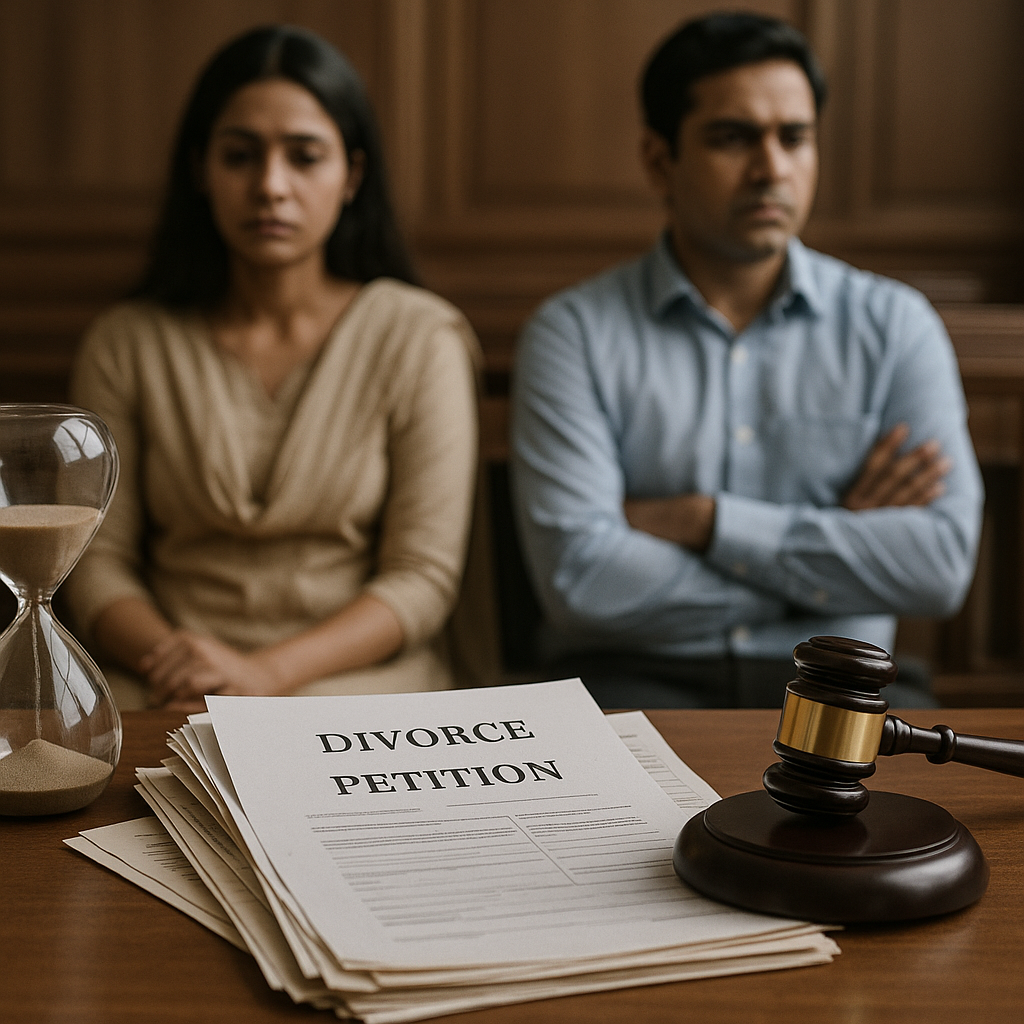
Why Most Divorce Cases Stall: Overlooked Legal Tactics in Indian Courts
Divorce was supposed to be a fresh start, but for many Indian couples, the courtroom feels more like a waiting room than a place for new beginnings. Months turn into years, tempers fray, and even a basic mutual consent divorce can drag on thanks to endless paperwork, court adjournments, and legal tactics that nobody warns you about. If you’ve found yourself frustrated by divorce case delays, you’re not alone – this problem is so common that it almost feels built into the system.
Why does something as personal as the end of a marriage get tangled in red tape? The answer isn’t just one thing. It’s a mix of outdated court procedures, missing documentation, strategic stalling by lawyers, and sometimes, small mistakes at the very start of the process. Knowing the real reasons for these delays, and how to avoid them, can save you months or even years of frustration.
If you’re searching for ways to avoid divorce case delays, here’s the blunt truth: most cases stall because of overlooked legal tactics and avoidable mistakes, not just slow courts. A smart legal strategy and careful documentation can make the difference between a quick resolution and a never-ending battle.
Why Divorce Cases in India Get Stuck: The Hidden Legal Obstacles
The Real Reasons Behind Divorce Case Delays
Most divorce cases in India stall due to a combination of inefficient court processes, avoidable legal missteps, and deliberate delay tactics by parties or lawyers. Even couples seeking a mutual consent divorce often face long waits because of missing paperwork, unclear petitions, or repeated adjournments.
Common Causes of Delays
- Incomplete divorce documentation: Missing marriage certificates, address proofs, or income details are the most frequent culprits.
- Poorly drafted divorce petitions: Vague grounds, legal errors, or contradictory statements can lead to repeated objections from the judge.
- Court adjournments: Sometimes unavoidable, but often requested by lawyers to buy time or negotiate outside court.
- Overburdened courts: Family courts in cities like Delhi, Mumbai, and Bangalore handle thousands of cases, making quick hearings rare.
- Tactical delays by one party: Refusing to appear, changing lawyers, or filing new applications can slow things down further.
The Impact on Families
The real cost of these delays is emotional and financial. Kids get caught in custody limbo. Spouses face mounting legal bills. Many people give up halfway, stuck in a marriage they wanted to leave years ago. Honestly, most of these problems are preventable with the right preparation.
How Court Procedures and Documentation Can Make or Break Your Case
Detailed paperwork and strict court procedures are both a shield and a stumbling block in Indian divorces. Missing a single document can push your case back six months.
Divorce Documentation Checklist
To avoid common pitfalls, make sure you have:
- Marriage certificate (original and copies)
- Proof of address for both parties
- Passport-sized photographs
- Proof of income (salary slips, IT returns)
- Details of children (birth certificates, school records)
- List of jointly owned property or assets
- Evidence supporting grounds for divorce (if contested)
Why Courts Reject Petitions
Judges are strict about paperwork because even a small error can lead to appeals later. Typical reasons for rejection or adjournment include:
- Unclear or contradictory statements in the petition
- Lack of proper signatures or notarization
- Incomplete address or contact details
Process Flow: Mutual Consent Divorce vs Contested Divorce
| Step | Mutual Consent Divorce | Contested Divorce |
|---|---|---|
| Filing petition | Both parties together | One party files alone |
| First hearing | Short, often routine | Can involve arguments |
| Cooling-off period | 6 months (sometimes waived) | Not required |
| Evidence and cross-exam | Usually skipped | Always required |
| Final decree | Quick, if all in order | Can take years |
If you want to speed things up, double-check every document and ask your lawyer to review your petition word by word. Even a missing staple can cause trouble.
Legal Strategy: Tactics Lawyers Use to Stall or Speed Up Divorce
A good legal strategy for divorce is about more than just filing papers. Some lawyers, honestly, drag their feet on purpose – especially if one spouse wants to delay the process.
Delay Tactics You Should Watch For
- Filing unnecessary applications or objections
- Repeatedly requesting adjournments
- Withholding key documents until the last minute
- Changing lawyers mid-case to reset the process
- Not appearing in court on scheduled dates
Fast Track Divorce Options in India
If both parties agree, a mutual consent divorce is the fastest route. Some states now have dedicated fast track courts for family matters, but you still need the basics right:
- Both spouses must appear in person for both motions
- All terms (alimony, custody, property division) must be agreed in writing
- Six-month cooling-off period can sometimes be waived if the marriage is beyond repair (per Supreme Court guidelines)
Proactive Legal Strategies
- Prepare a detailed chronology of events for your lawyer
- Organize all documents in advance
- Insist on regular status updates
- Attend every hearing personally, if possible
- Use alternative dispute resolution (mediation) to settle issues outside court
For more practical strategies, you can check advice from specialists like those at Family Law Specialist in India: Practical Strategies for Divorce and Child Custody.
Mutual Consent Divorce: Why Even Simple Cases Get Delayed
Mutual consent divorce is supposed to be simple. But even here, delays are common because of procedural mistakes or last-minute disagreements.
Key Steps in Mutual Consent Divorce
- Both parties file a joint petition stating their separation and terms.
- Court records statements and sets a six-month cooling-off period.
- Second motion is filed after six months (sometimes sooner if waived by the court).
- Judge confirms statements and passes final decree.
Common Pitfalls
- Not turning up for the second motion
- Disagreement over alimony or child custody at the last minute
- Missing or outdated address proofs
- One party backing out or refusing to sign
How to Avoid Delays
- Write down all terms in clear language and get them notarized
- Both parties should attend each hearing – courts rarely accept representatives
- Double-check all documentation before the first motion
- Request for waiver of cooling-off period if eligible (show proof of irretrievable breakdown)
Contested Divorce: Delays, Evidence, and Courtroom Realities
Contested divorces almost always take longer. The main reason is the need for evidence, cross-examination, and frequent objections from the other side.
Typical Timeline for Contested Divorce
- One party files the petition
- The other party receives notice and files a reply
- Court frames issues (what needs to be proved)
- Evidence and witness examination
- Arguments and judgment
This process can take between 2 and 7 years depending on the complexity and willingness of both parties to cooperate.
Evidence and Documentation
- Collect all relevant WhatsApp chats, emails, and financial documents
- Witnesses must be prepared to appear in court
- Keep originals and certified copies ready
Practical Tips for Contested Cases
- Avoid making wild allegations you can’t prove
- Don’t skip hearings – absence can be used against you
- Try mediation even during the process; settlements can end the case early
- Keep communication civil – angry messages often end up as evidence
Why Fast Track Divorce in India Is Still Rare
Many people search for ‘fast track divorce India’ hoping for a quick fix. The truth is, most courts still follow standard timelines unless both parties cooperate fully and paperwork is perfect.
Fast Track Courts: Reality Check
- Only a handful of states have operational fast track family courts
- These courts prioritize urgent cases (domestic violence, child custody)
- Even in fast track courts, procedural requirements remain strict
How to Improve Your Chances
- File in a jurisdiction where both parties live or last resided together
- Ensure all paperwork is in order before the first hearing
- Keep all communication with your spouse documented
- Hire a lawyer experienced with local court procedures
Cooling-Off Period: Can It Be Waived?
The Supreme Court allows the six-month cooling-off period to be waived in mutual consent divorces if it is clear that the marriage cannot be saved. You must file an application showing:
- Both parties have lived separately for at least one year
- All issues (maintenance, custody, property) are settled
- There is no chance of reconciliation
- Both parties agree to waive the waiting period
Divorce Petition Tips: Drafting, Filing, and Avoiding Rejection
A well-drafted divorce petition is your best protection against delays. Judges spot vague or contradictory statements quickly and may reject or return the petition for corrections.
Drafting Tips
- Be clear and specific about the grounds for divorce (cruelty, desertion, adultery, etc.)
- List all facts in chronological order
- Attach supporting documents as annexures
- Don’t exaggerate or make unprovable claims
Filing Process
- Prepare petition with all supporting documents
- File at the appropriate family court (based on jurisdiction)
- Pay required court fees
- Court issues notice to the other party
- Attend first hearing and respond to any objections
Common Mistakes to Avoid
- Filing in the wrong jurisdiction
- Not attaching required documents
- Forgetting to serve notice to the other party
- Using outdated legal language or templates
Mediation and Alternative Dispute Resolution: Can They Really Save Time?
Many courts now encourage mediation – an out-of-court process where a neutral third party helps couples settle issues. This is not just a formality; successful mediation can end a case in weeks instead of years.
Benefits of Mediation
- Cheaper than full litigation
- Less adversarial, reduces stress for children
- Agreements reached in mediation are enforceable by court
When Mediation Fails
If mediation doesn’t work, the court process resumes. But at least you’ll know you tried every option.
Best Practices
- Go into mediation with an open mind
- Prepare a list of non-negotiables and possible compromises
- Take your lawyer along for legal clarity
Frequently Asked Questions
What causes most divorce case delays in India?
Delays are usually caused by incomplete documentation, repeated court adjournments, and intentional stalling by one party or their lawyer. Overcrowded courts and unclear petitions also add to the waiting time.
How long does a mutual consent divorce take in India?
A mutual consent divorce typically takes 6 to 18 months. The main waiting period is the six-month cooling-off period, which can sometimes be waived if both parties agree and the court is satisfied.
Can the six-month cooling-off period be waived?
Yes, the Supreme Court allows courts to waive the six-month period in mutual consent cases if the marriage has broken down irretrievably and both parties have settled all issues. You must file a waiver application with supporting documents.
What documents are needed for a divorce petition?
Key documents include marriage certificate, proof of address, photographs, income proofs, children’s details, and evidence supporting the grounds for divorce. Missing documents are a common reason for delays.
What is the difference between mutual consent and contested divorce?
In mutual consent divorce, both spouses agree on all terms and file jointly. Contested divorce happens when one spouse disagrees, leading to evidence collection, witness examination, and much longer timelines.
How can I speed up my divorce case?
To speed up your case, ensure all documentation is complete, attend every hearing, avoid unnecessary adjournments, and consider mediation to resolve disputes outside court.
What is a fast track divorce in India?
Fast track divorce refers to expedited court processes, often via specialized family courts. These are rare and mainly available in larger cities. Even in fast track courts, correct paperwork and cooperation are essential.
Can I get a divorce without appearing in court?
Both parties must usually appear in person, especially for mutual consent divorce. Courts rarely allow lawyers to appear alone unless there are exceptional circumstances.
Why do lawyers delay divorce cases?
Some lawyers delay cases intentionally to negotiate better settlements, increase legal fees, or because their client wants to stall the process. It’s important to hire a lawyer with a reputation for efficiency.
What happens if one party refuses to attend court?
If one party repeatedly skips hearings, the court can proceed ex-parte (in their absence) after giving them a fair chance. This usually slows the process but doesn’t stop it entirely.
How much does a divorce cost in India?
Costs vary by city and complexity. Mutual consent divorce can cost between ₹15,000 – ₹50,000, while contested divorces can go upwards of ₹1 lakh due to longer timelines and legal fees.
What is the role of mediation in Indian divorce cases?
Mediation helps couples settle issues like alimony and custody outside court, saving time and money. Successful mediation leads to a binding agreement, ending the court process faster.
Can I file for divorce online in India?
Some states allow e-filing of divorce petitions, but personal court appearances are still required for hearings and final statements.
Is it possible to withdraw a divorce petition after filing?
Yes, either party can withdraw the petition before the final decree. In mutual consent cases, both parties must agree to withdraw.
What happens if my petition is rejected?
You can file a fresh petition after correcting errors or missing documents. It’s better to review all paperwork with a lawyer before refiling.
Key Takeaways
- Divorce case delays are often caused by incomplete paperwork, poor legal strategy, or deliberate stalling tactics.
- Proper divorce documentation and clear petitions reduce the risk of adjournments.
- Mutual consent divorce is faster, but still faces delays if parties disagree or miss hearings.
- Fast track divorce in India is rare and requires perfect cooperation and documentation.
- Contested divorces can take 2 – 7 years, mainly due to evidence and cross-examination.
- Mediation can save time and money if both parties are open to compromise.
- Courts require personal appearances for most divorce hearings.
- Cooling-off period in mutual consent divorce can be waived in some cases.
- Filing in the correct jurisdiction and attaching all documents is essential.
- Choosing the right lawyer and staying proactive are the best ways to avoid delays.
Staying Ahead of Delays: What Actually Works
Divorce in India isn’t just about ending a marriage – it’s about managing a slow, complicated system. The real trick is to spot the small mistakes that cause big delays and to stay involved at every step. If you’re hoping for a quick finish, focus on paperwork, show up for every hearing, and don’t let your lawyer push things off unless absolutely necessary.
Most delays can be avoided if you know what to expect. Keep your documents ready, double-check your petition, and stay open to mediation. The courts may seem slow, but a prepared and persistent approach makes all the difference. If you’re stuck, don’t be afraid to get a second opinion from a family law specialist. Sometimes, that’s all it takes to get things moving again.
